Citizen Programme
Programme Overview
PRSSE is a place where school curriculum meets real laboratories, real mentors, and real-world skills. PRSSE complements school education by giving students and teachers what textbooks alone cannot: hands-on experimentation, scientific thinking, exposure to scientific methods, and a culture of curiosity and research.
Mentoring support comes from experienced educators and academic leaders associated with reputed institutions in Nagpur and other parts of the country, ensuring academic rigor and relevance to current educational reforms including NEP 2020.
Annual Student & Teacher Programmes (At a Glance)
PRSSE's annual programmes are thoughtfully designed to nurture scientific curiosity, critical thinking, and hands-on learning among students and educators. Through year-long laboratory training, immersive workshops, mentorship initiatives, exposure camps, and innovation-driven activities, these programmes bridge the gap between classroom education and real-world scientific exploration.
Year-long Laboratory Training
Structured laboratory training aligned with the school curriculum for Grades 6-9, enhancing conceptual learning through practical experimentation.
Grades 6-9
Monthly Intensive Lab Exposure
Specially designed monthly immersive laboratory sessions for outstation schools, enabling students to experience advanced scientific learning environments.
Grades 6-8
Advanced Explorer
Batches
Specialized mentorship and advanced scientific exploration for national and international Science and Mathematics competitions.
Competitive Excellence
Teacher Development Programme (RAISE)
NEP 2020-aligned teacher development initiative promoting innovative teaching practices and inquiry-based learning methods.
NEP 2020
Citizen Science
Workshops
Interactive workshops designed for parents and families to cultivate scientific thinking, observational skills and curiosity-driven learning.
Parents & Community
Enrichment Events & Exploratory Activities
Exciting events including sky-watching sessions, quizzes, summer schools, science shows, Olympiad exposure workshops and many more experiential activities.
Experiential Learning
Enrichment & Signature Events
Along with structured programmes, PRSSE offers a vibrant calendar of events that make science a living experience for the whole community. These activities ensure that students, teachers, and parents experience science not as a subject restricted to marks, but as a joyful, creative, and empowering way of looking at the world.
🔭
Overnight Sky-Gazing Camps
Immersive astronomy camps for PRSSE students featuring telescope observations, celestial navigation, and guided night-sky exploration sessions.
Scientist Webinars on Youtube Channel
Special webinars on the PRSSE YouTube channel by eminent scientists, researchers, and educators on nationally important scientific occasions.
Vigyaan Jigyasa
Quiz
Interschool science quiz competitions encouraging analytical thinking, scientific temperament, and collaborative learning among students.
Thematic Competitions
Annual interschool thematic competitions held every January on Prof. Rajendra Singh's birth anniversary.
Exposure Camps
Practical exposure camps for Dr. Homi Bhabha Balvaidnyanik Competition and Vidyarthi Vigyan Manthan participants.
STEM & DIY Workshops
Advanced STEM/DIY workshops for curious learners passionate about innovation and experimentation.
Grade 10 Summer Crash Course
Intensive conceptual learning sessions through experiments and demonstrations conducted during the last week of May.
Science Shows &
Webinars
Interactive science demonstrations and educational webinars by visiting science educators from across India.
Teacher Training Programmes
One-day teacher upskilling programmes for schools seeking impactful, modern science education methods.
Students' Programme Overview
Professor Rajendra Singh Science Exploratory offers enriching programmes for students in middle school to high school in grades 5 till 10. Our year-long experiential learning programme is specifically designed for students in grades 6 to 9, fostering hands-on learning and practical skills. Additionally, we organize summer programmes and camps for students in grades 5 and 10. Our dedicated trainers work closely in well-equipped laboratories, complemented by visiting experts from across the country, to help students develop essential skills. We also provide training programmes for teachers, ensuring a comprehensive educational experience for both students and educators.
One-Day School Visits for Hands-On Lab Experiences
Give your students a real laboratory experience - in just one school day.
Prof. Rajendra Singh Science Exploratory (PRSSE), Nagpur, invites schools to bring their students for a specially designed one-day, hands-on laboratory experience that complements and enriches the school curriculum. During this visit, students do not just watch demonstrations - they perform experiments themselves, observe, record, and discuss results like young scientists.
Over the course of 5 hours, learners move through activity stations in Physics, Chemistry, Biology and STEM/DIY, carefully mapped to concepts from Grades 5 to 10. Each activity is designed to be safe, age-appropriate, and engaging, with a strong focus on developing curiosity, observation skills, and conceptual clarity.
Sessions are conducted in well-equipped laboratories by experienced educators and trainers who guide students through each step of the experiment and encourage them to think, ask questions, and connect what they see with what they learn in school. Short reflection and discussion segments help students consolidate their learning before they return to school.
Programme Details
Day &
Time:
Tuesday-Friday, 10:00
a.m. to 3:00 p.m. (5 hours)
Student
Profile:
Group 1: Classes 5 to
7,
Group 2: Classes 8 to 10
Group 2: Classes 8 to 10
Batch
Size:
50-60 students per
visit
Mode:
Paid, per-student
basis
Booking:
Schools can contact PRSSE to discuss dates, choose themes as per their curriculum and freeze a suitable and available day for the visit.
Core Annual Student Programmes
Building scientific temperament beyond the textbook
- For: Students entering Grades 6, 7, 8 (can continue up to Grade 9)
- Sessions: 35-40 sessions per year, 2 hours per week
- Entry: Merit-based entrance exam (held in April; notification in February)
This flagship programme gives students what regular classrooms rarely can: systematic laboratory training across Physics, Chemistry, Biology, Mathematics, Electronics technology, and DIY activities in a professional lab environment. Students perform experiments themselves, record and analyse data, and discuss their observations, developing the confidence to “think and work like a young scientist.”
The programme closely complements school curriculum but goes beyond it by focusing on experimental design, critical thinking, creativity, teamwork, and science communication through workshops, expert talks, competitions, and outreach activities.
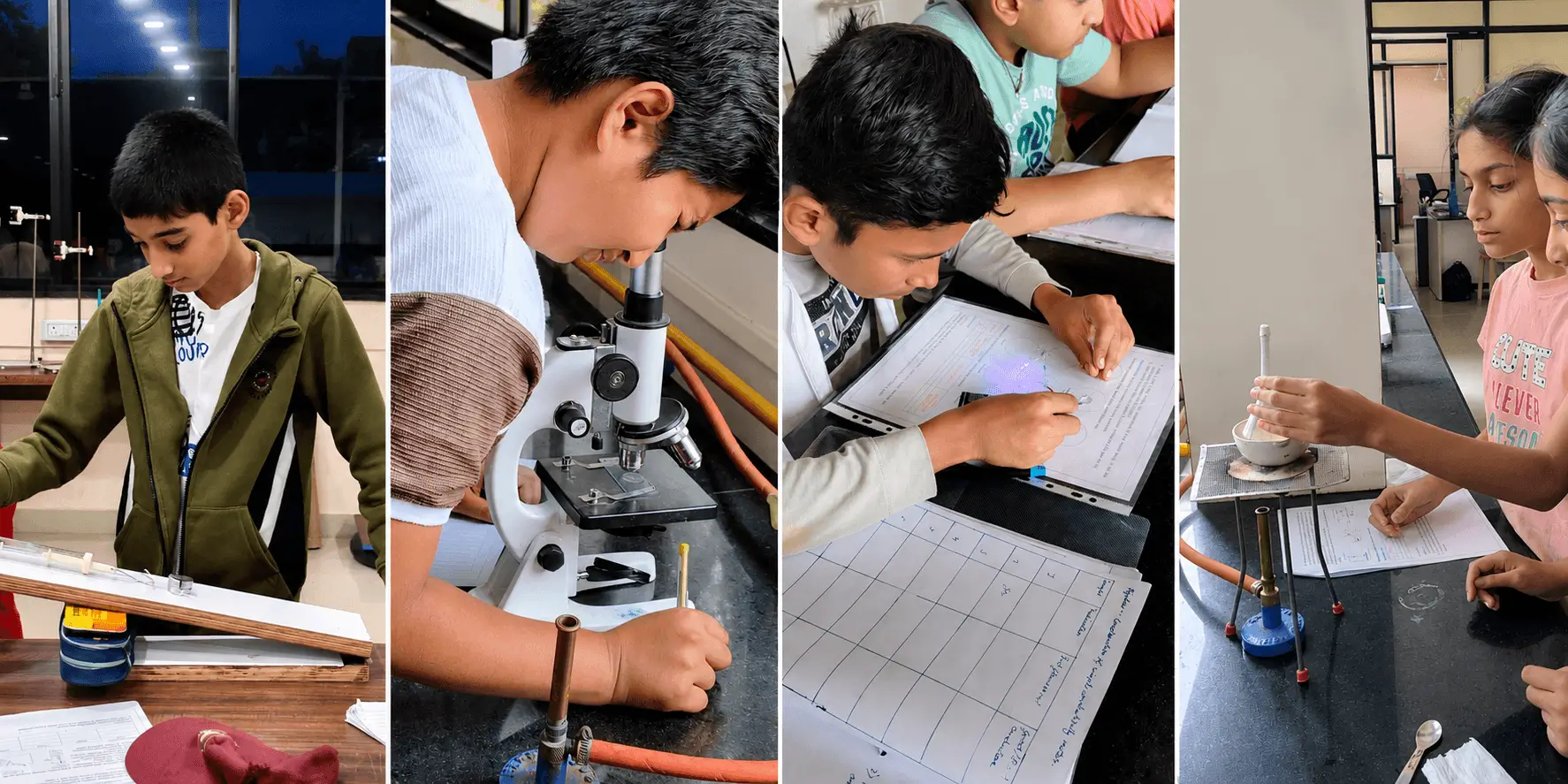
Intensive monthly lab days for outstation and busy students
- For: Grades 6 to 8
- Sessions: 10 extended sessions per year (about 6 hours once a month, June-April)
- Entry: Through school administration
This programme is designed for students who cannot attend weekly sessions of programme 1 but still want serious lab exposure. Once a month, students spend a full extended session in the laboratory working through well-planned experimental modules that connect directly with their school topics while adding inquiry, data analysis, and real-life application.
These monthly contact sessions ensure that distance or a packed schedule does not become a barrier to quality STEM experiences, making it ideal for partner schools in and around Nagpur.
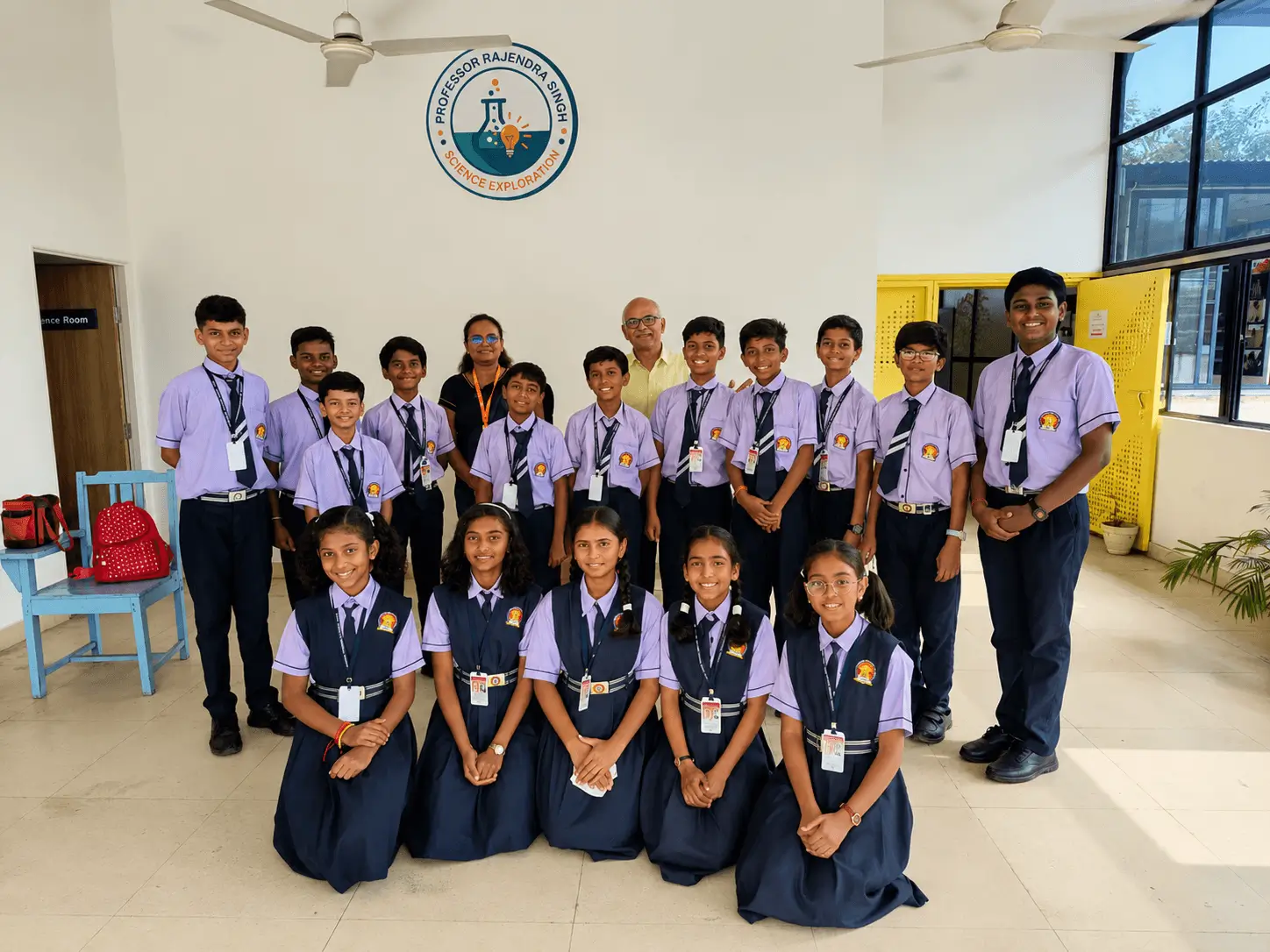
Advanced "Explorer" Programmes (Gifted / Motivated Learners)
Track for Dr. Homi Bhabha Balvaidnyanik Spardha
- For: Grade 6
- Intake: 30 students per year
- Sessions: 70-80 sessions (two 2-hour sessions per week)
- Entry: Entrance exam in April
This batch is a structured mentoring pathway for students aiming at Dr. Homi Bhabha Balvaidnyanik Spardha (MSTA). The programme covers all stages: theory, practicals, action research project, and final interview, with a strong focus on depth of understanding and scientific inquiry rather than rote preparation.
Students work on experiments, small research-based tasks, and presentations under guidance, cultivating habits of observation, questioning, planning, and reflection that benefit not only the competition but their overall academic growth.
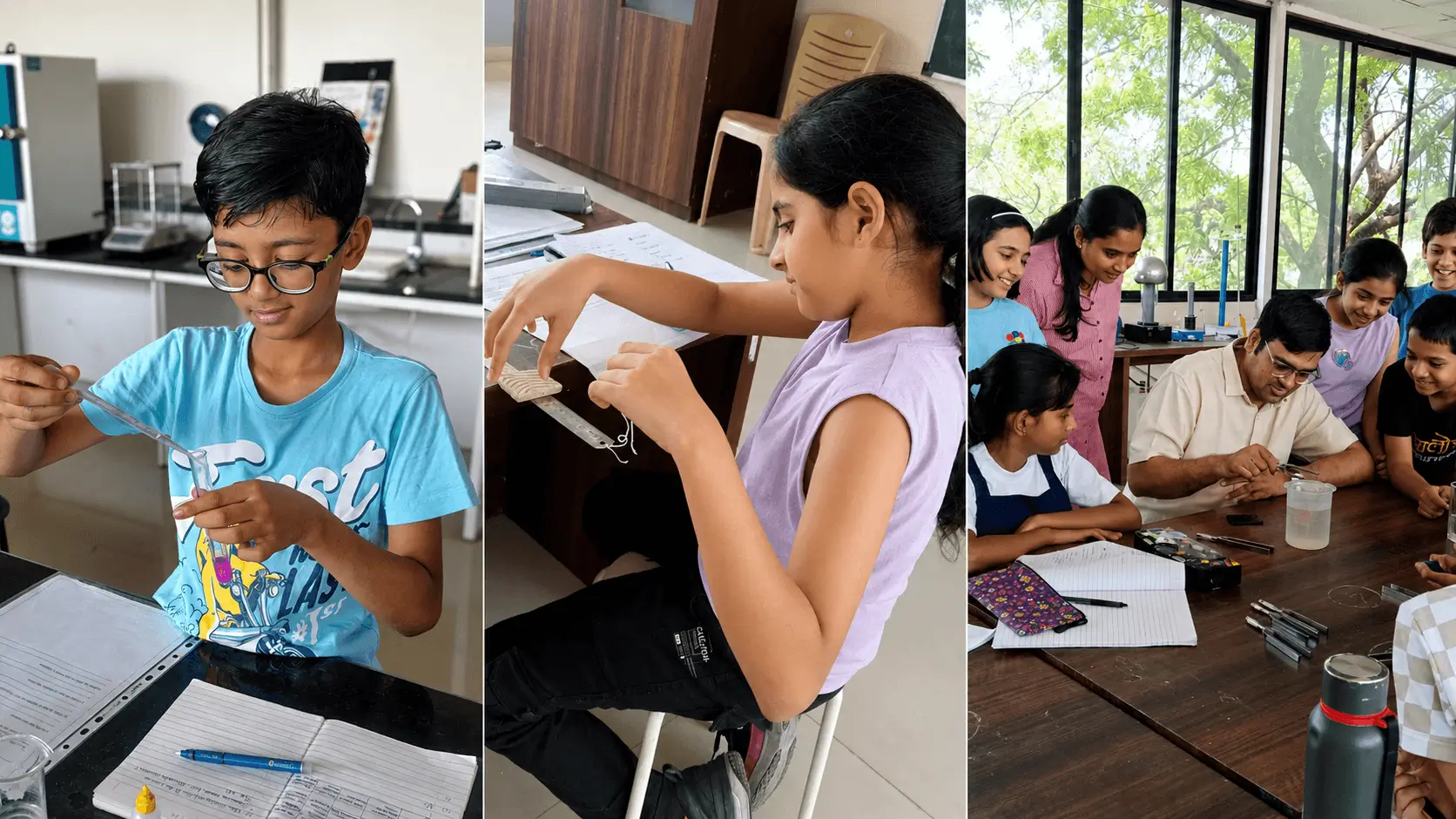
For young mathematicians with a love for problem-solving along with hands-on training in science and technology in laboratory
- For: Grade 7
- Intake: 30 students per year
- Sessions: 70-80 sessions (two 2-hour sessions per week)
- Structure: Two 2-hour sessions per week, including one Mathematics-focused and one integrated lab-based session
- Entry: Entrance exam in April
The Ramanujan Explorer Programme supports mathematically inclined students who want to go beyond textbook exercises and prepare for contests such as NMTC and BMTC. Training includes concept enrichment, non-routine problems, and strategic approaches to problem-solving.
A distinctive feature is the integration of one laboratory session per week, where students see how mathematics connects with Physics, chemistry, biology through data analysis, and real-world measurements building a balanced “math + science” temperament instead of narrow exam coaching.
Strong foundation for Junior Science and Mathematics Olympiad and beyond.
- For: Grade 8
- Intake: 20 students per year
- Sessions: About 150 (Four 2-hour sessions per week, with a dedicated lab session and a mathematics classroom)
- Entry: Entrance exam in April
This is an intensive preparation track inspired by the ethos of the International Junior Science Olympiad. It deepens students' understanding of Physics, Chemistry, and Biology while systematically building multi-step reasoning, numerical skills, and the ability to think and argue like a scientist. Students learn through a balanced combination of theory sessions, practical experiments, and mini research projects/case studies that strengthen concepts up to the Grade 10 curriculum within 12 months of this vigorous training. To broaden their perspective on science and society, students also participate in educational tours within Nagpur and to institutions outside the city, where they see science in action beyond the classroom.
A team of visiting expert mentors from Nagpur and other cities engages students in interactive discussion-based classes, ensuring personal attention and deep learning. The programme nurtures curiosity and a genuine love for science by linking competition topics with big questions and real-world applications, helping students see how what they learn matters in everyday life and future careers. There is one dedicated session in the laboratory per week for hands-on experiential learning. This programme provides the complete learning package to develop scientific temperament.
Bridging school learning and research-oriented science
- For: Grade 9
- Intake: 20 students per year
- Sessions: About 150 (Four 2-hour sessions per week, including one lab and one Mathematics session on advanced topics)
- Entry: Entrance exam in April
Raman Explorer Programme is designed for students ready to move from merely “learning chapters” to actually doing science. Along with advanced work in Physics, Chemistry, Biology, Electronics, and Mathematics, students take up guided mini-research projects: framing questions, planning experiments, collecting and interpreting data, and presenting findings. The batch also provides focused preparation for Dr. Homi Bhabha Balvaidnyanik Spardha, Vidyarthi Vigyaan manthan (later stages), NMTC, BMTC including theory, practicals, project work and interview readiness, supported by mock tests and systematic performance tracking. This creates a bridge between school, Olympiads, and future research pathways.
Teachers' Programme Overview
Welcome to the Teacher's Induction Programme! Our initiative focuses on enhancing the skills and methodologies of educators in the science domain, ensuring they are well-equipped to foster engaging and effective learning environments.
PROGRAMME HIGHLIGHTS
Strengthening Science & Mathematics Education
Our induction programmes are designed to strengthen classroom practices through hands-on, activity-based learning. Each session provides teachers with innovative pedagogical strategies and practical resources, promoting inquiry-based learning aligned with the National Education Policy (NEP).
07
Total Programmes Arranged
151
Teachers Inducted
RAISE PROGRAMME
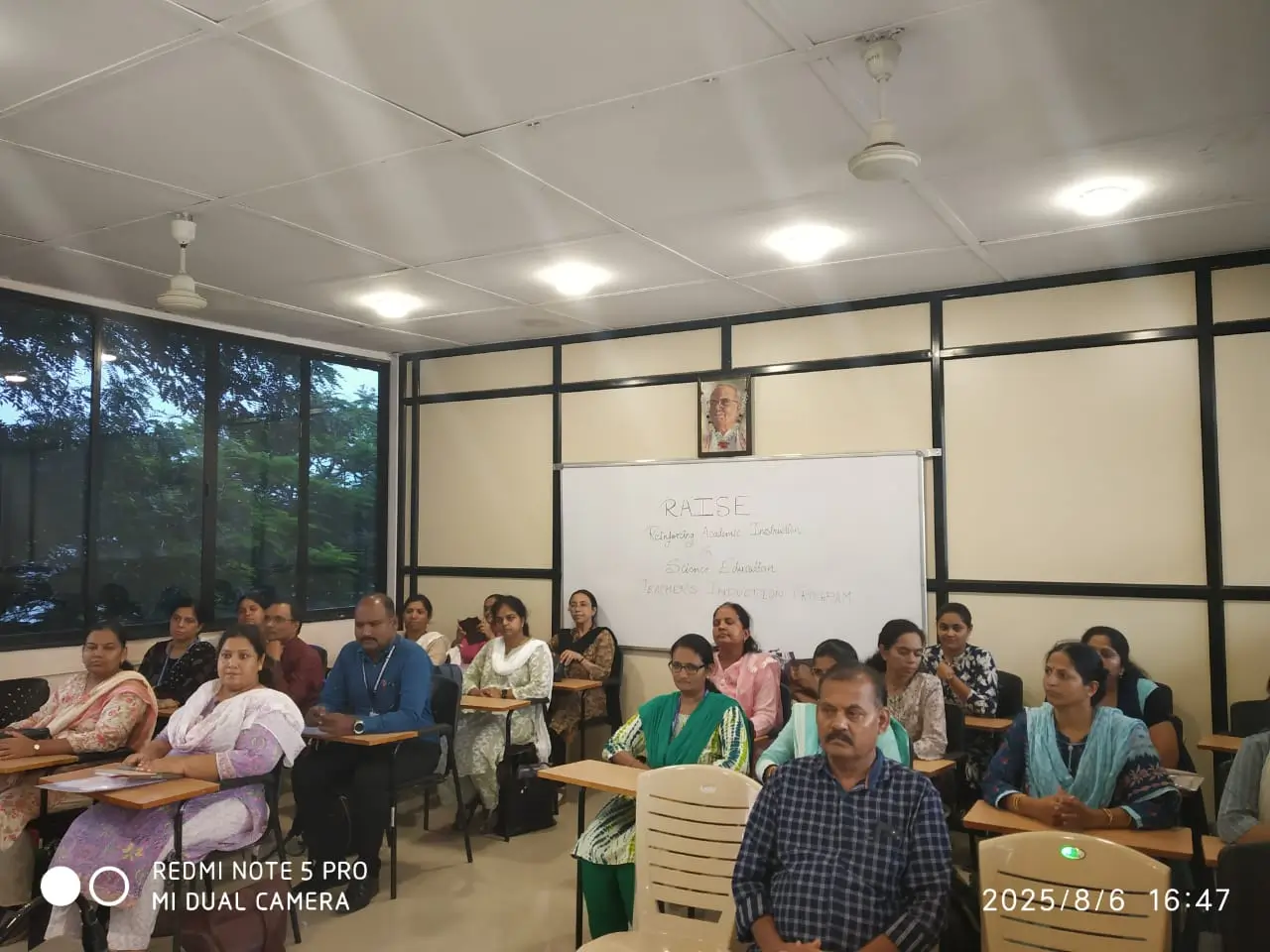
Reinforcement of Academic Instructions and Science Education
NEP-aligned induction and enrichment initiative for Science & Mathematics teachers.
RAISE is a year-long teacher development programme promoting hands-on, inquiry-driven science teaching aligned with NEP 2020. Through intensive workshops, teachers explore experiential learning, design classroom activities, address real teaching challenges, and build strategies to foster curiosity, critical thinking, and effective assessment. Participants receive certification in modern science pedagogy.
20
Teachers / Year40+
Sessions06
Workshops8H
Per Day
In Association With:
Vidya Bharati (Vidarbha Prant)
Entry:
Nominated teachers from schools around Nagpur
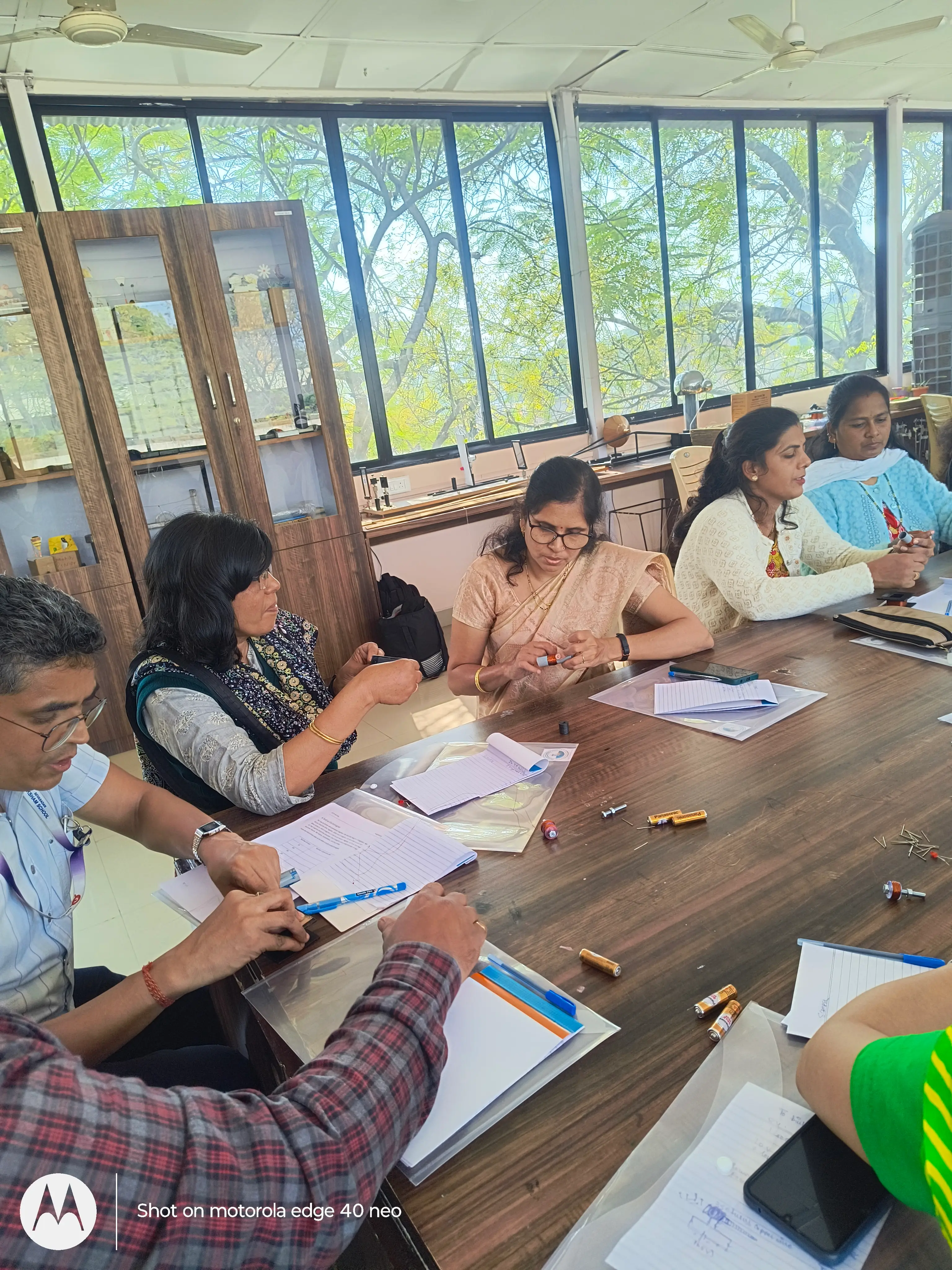
Teachers' Induction Reports - Photo Gallery
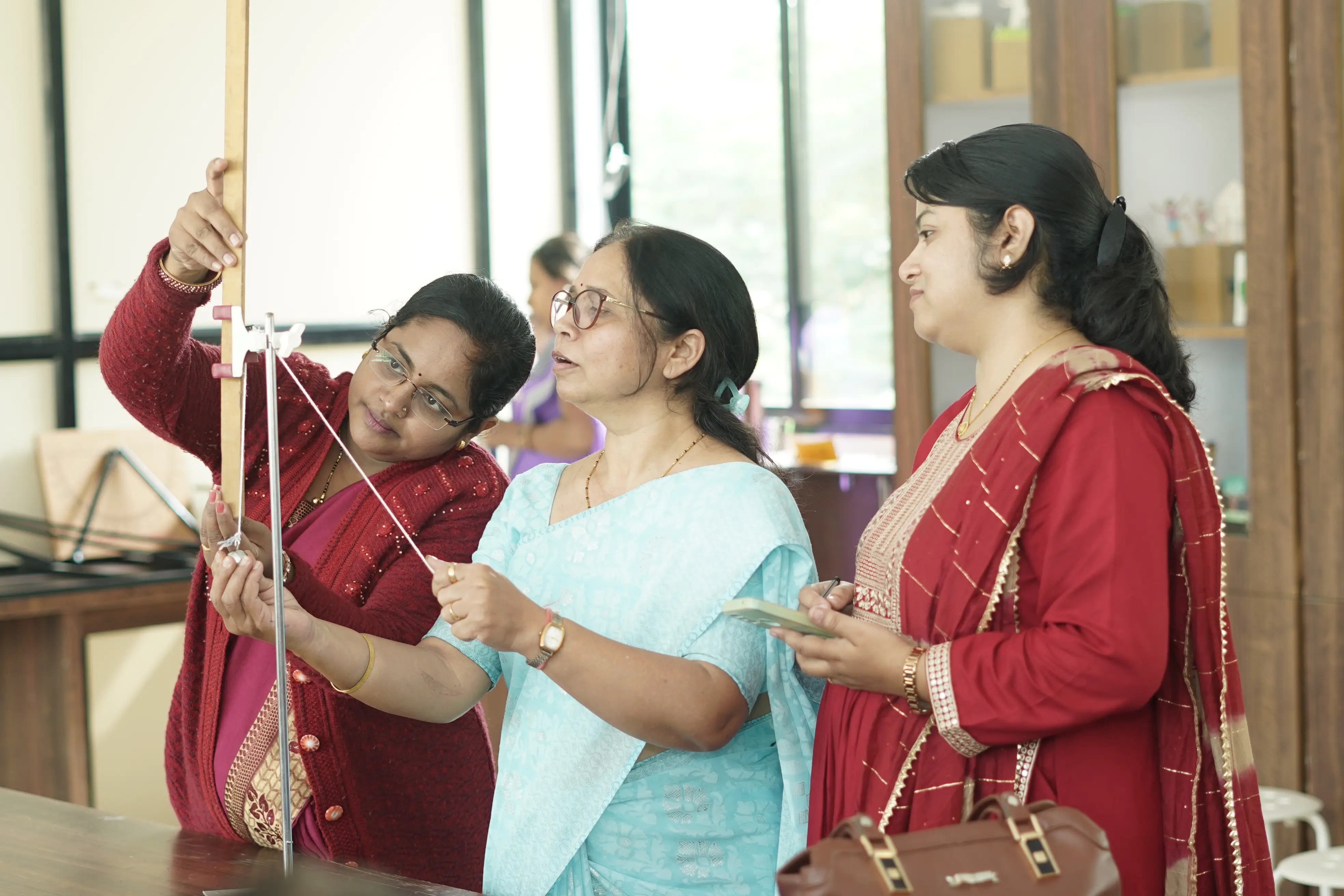
Teacher Programme Activity
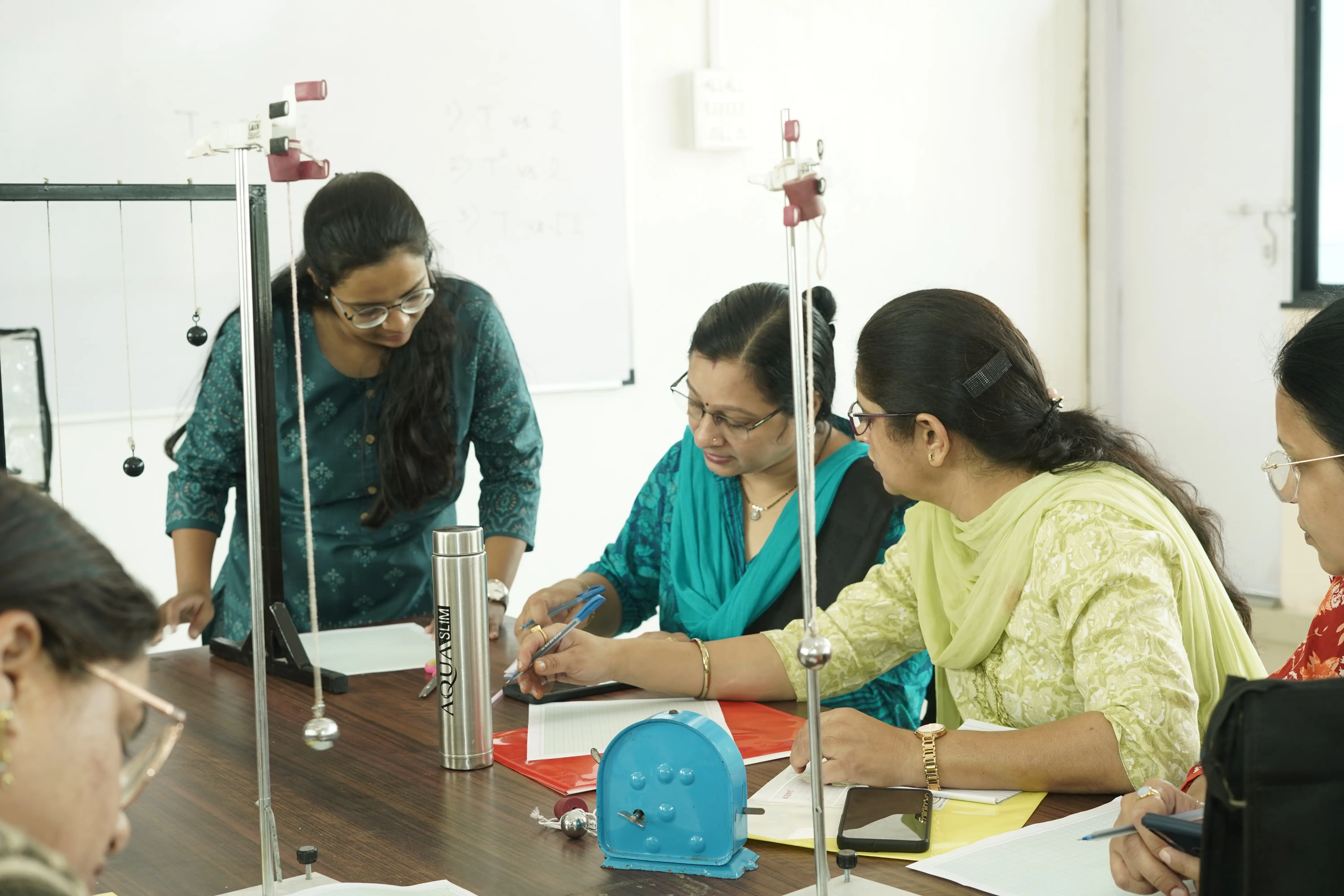
Training Session
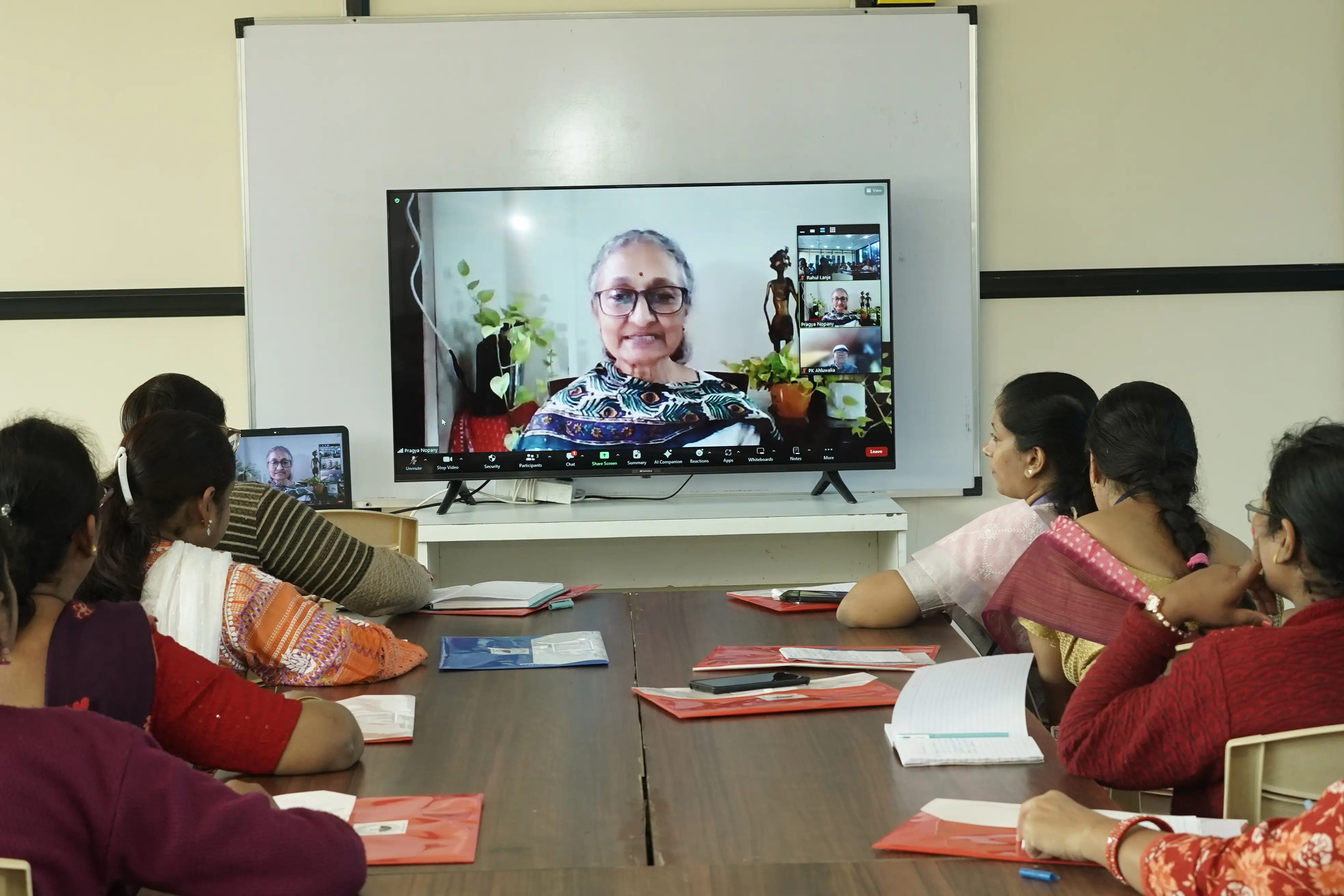
Enrichment Programme
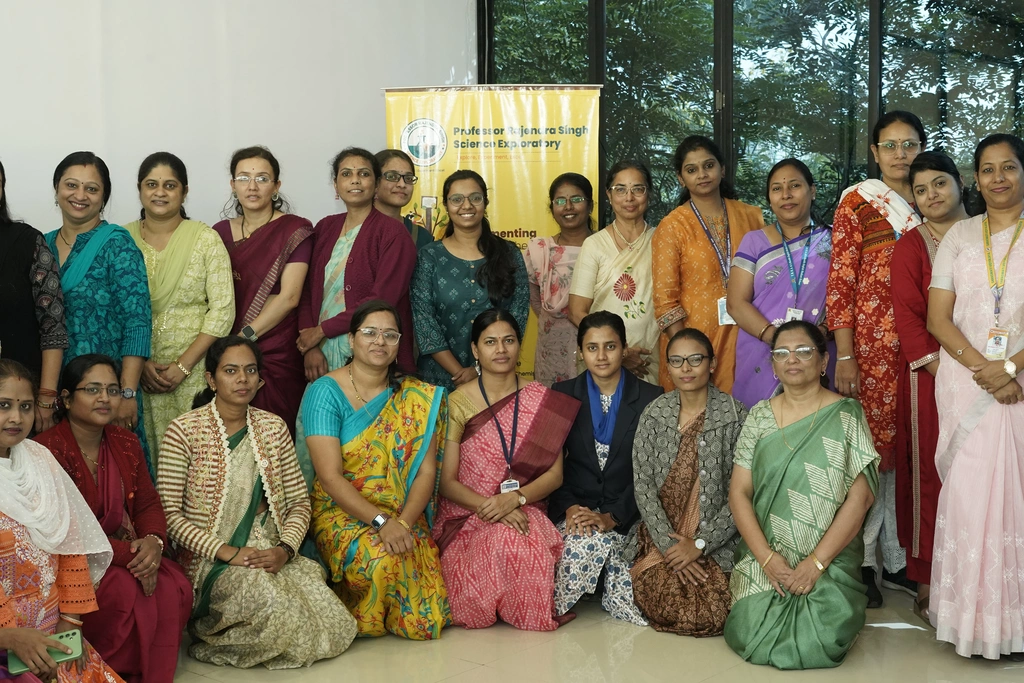
Interactive Session
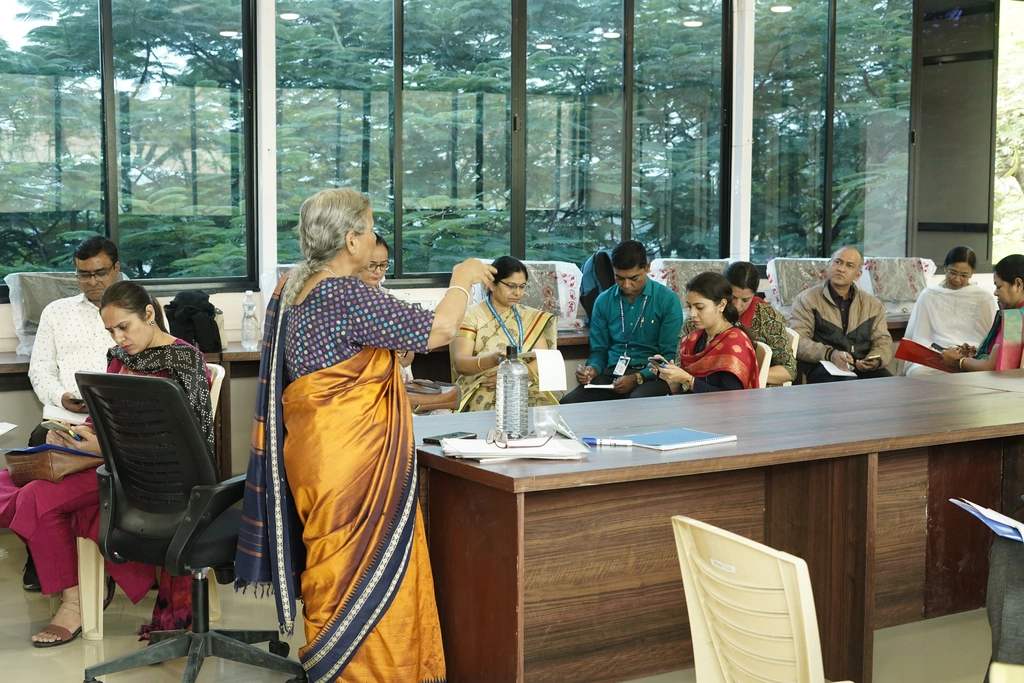
Science Demonstration
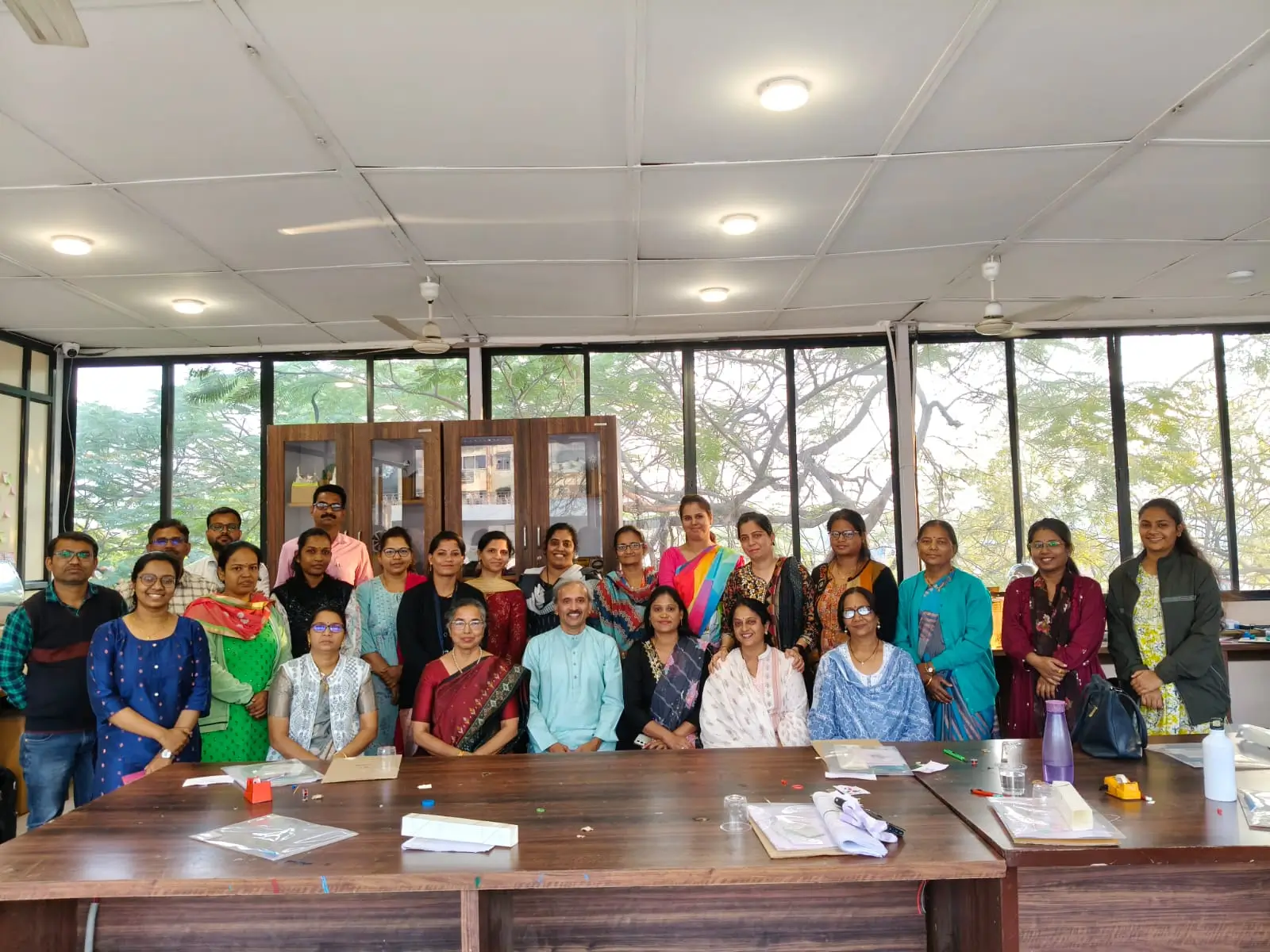
Hands-on Workshop
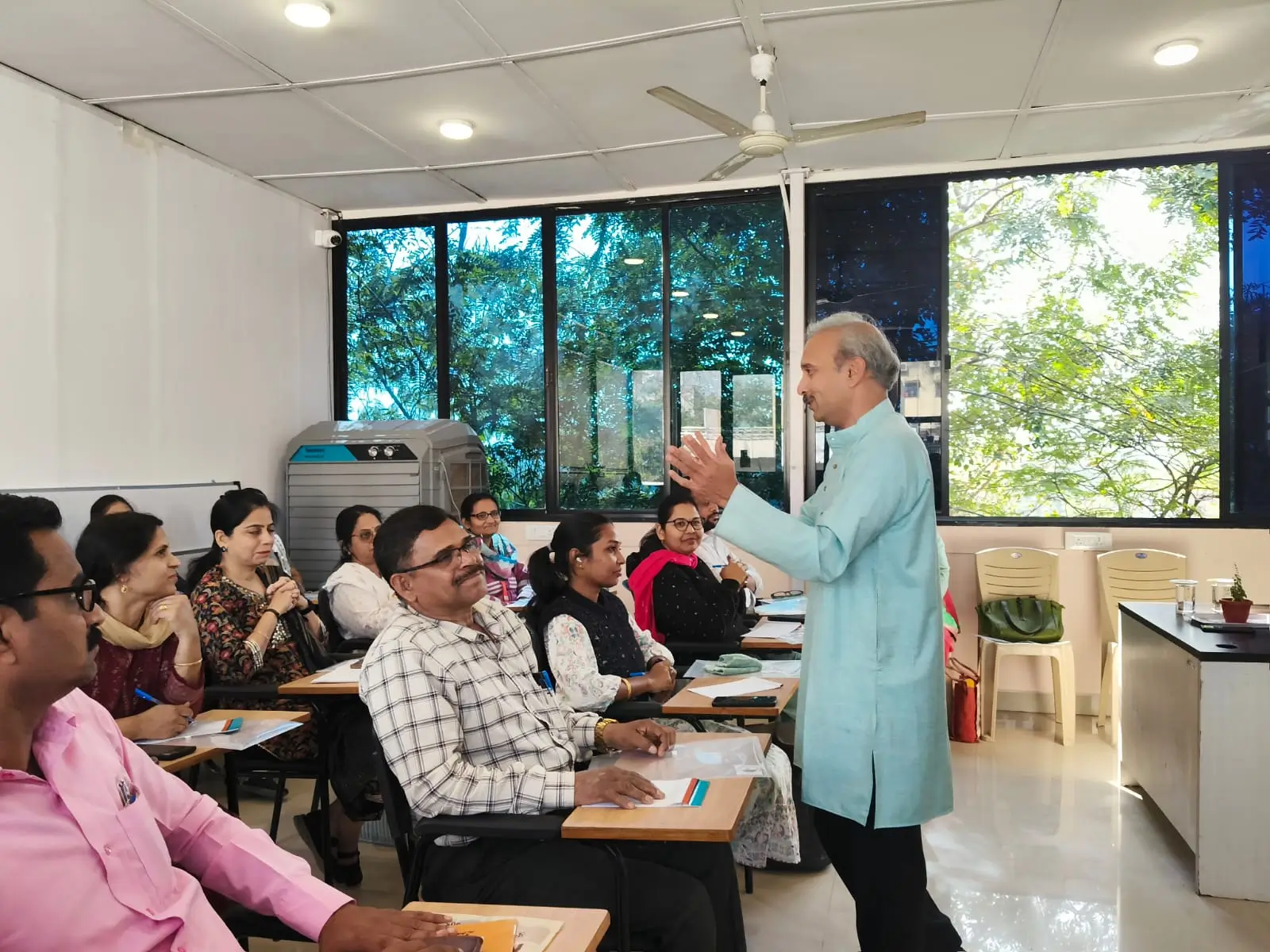
Physics Training
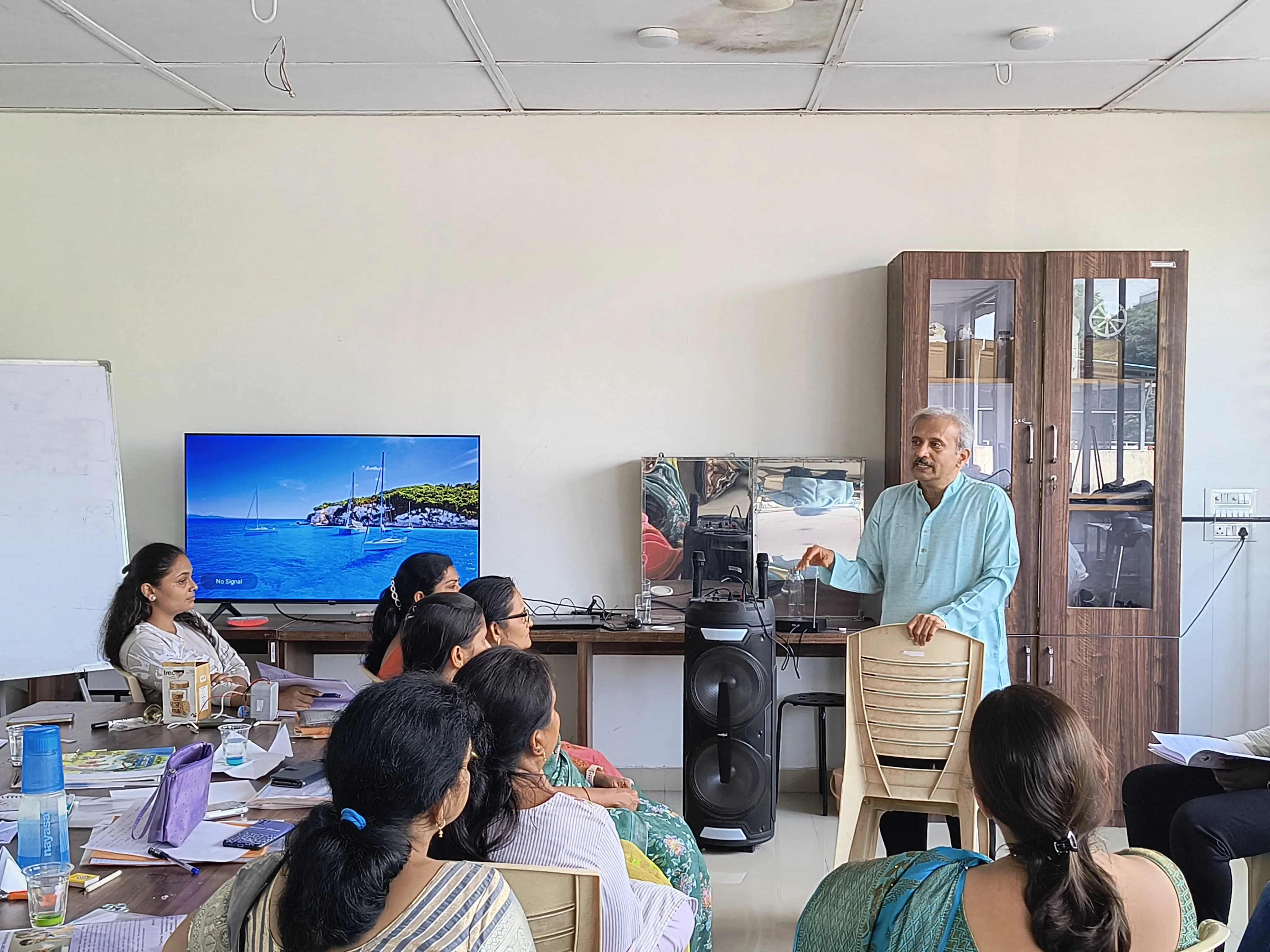
Physics Lab
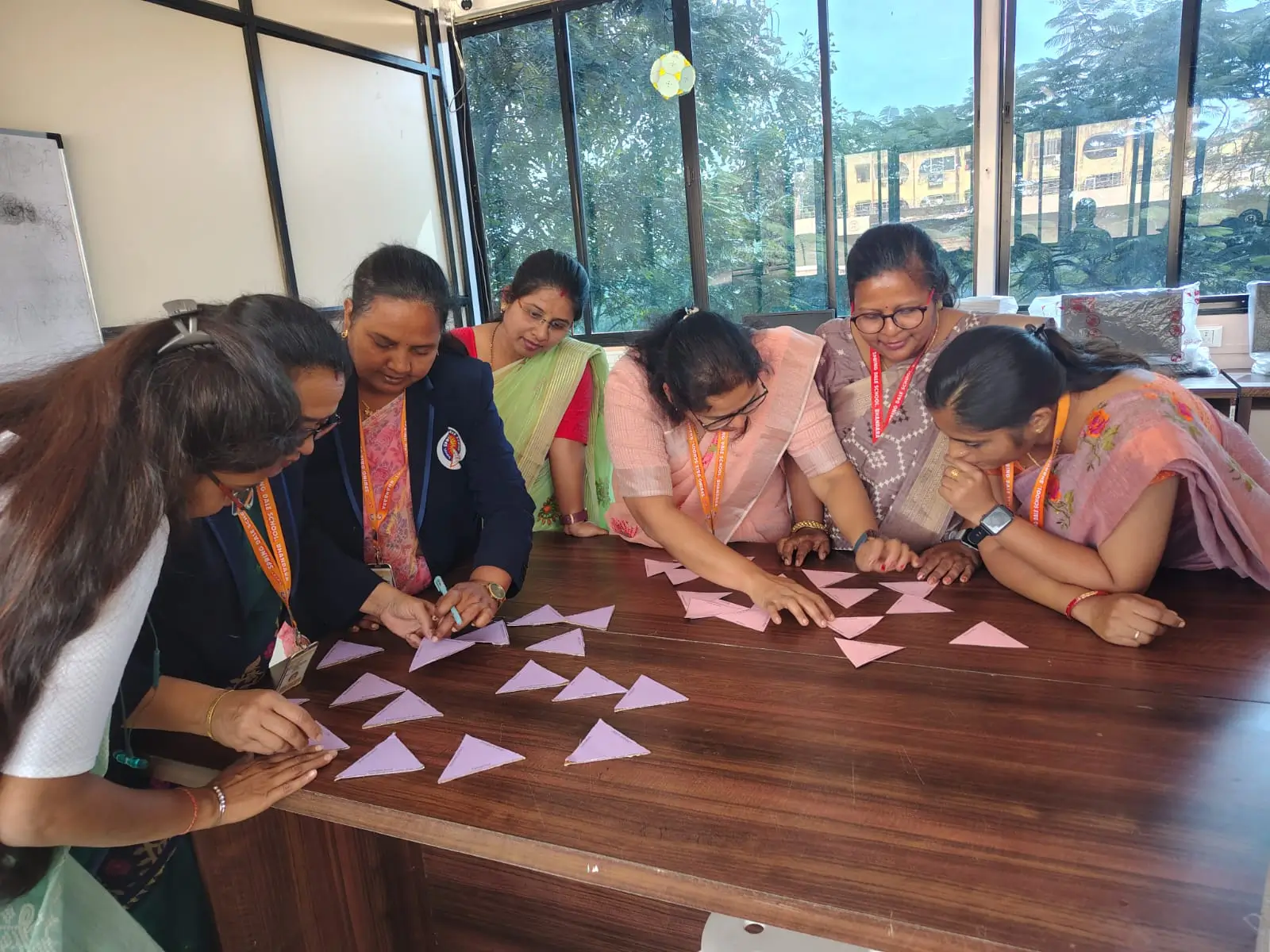
Development Session
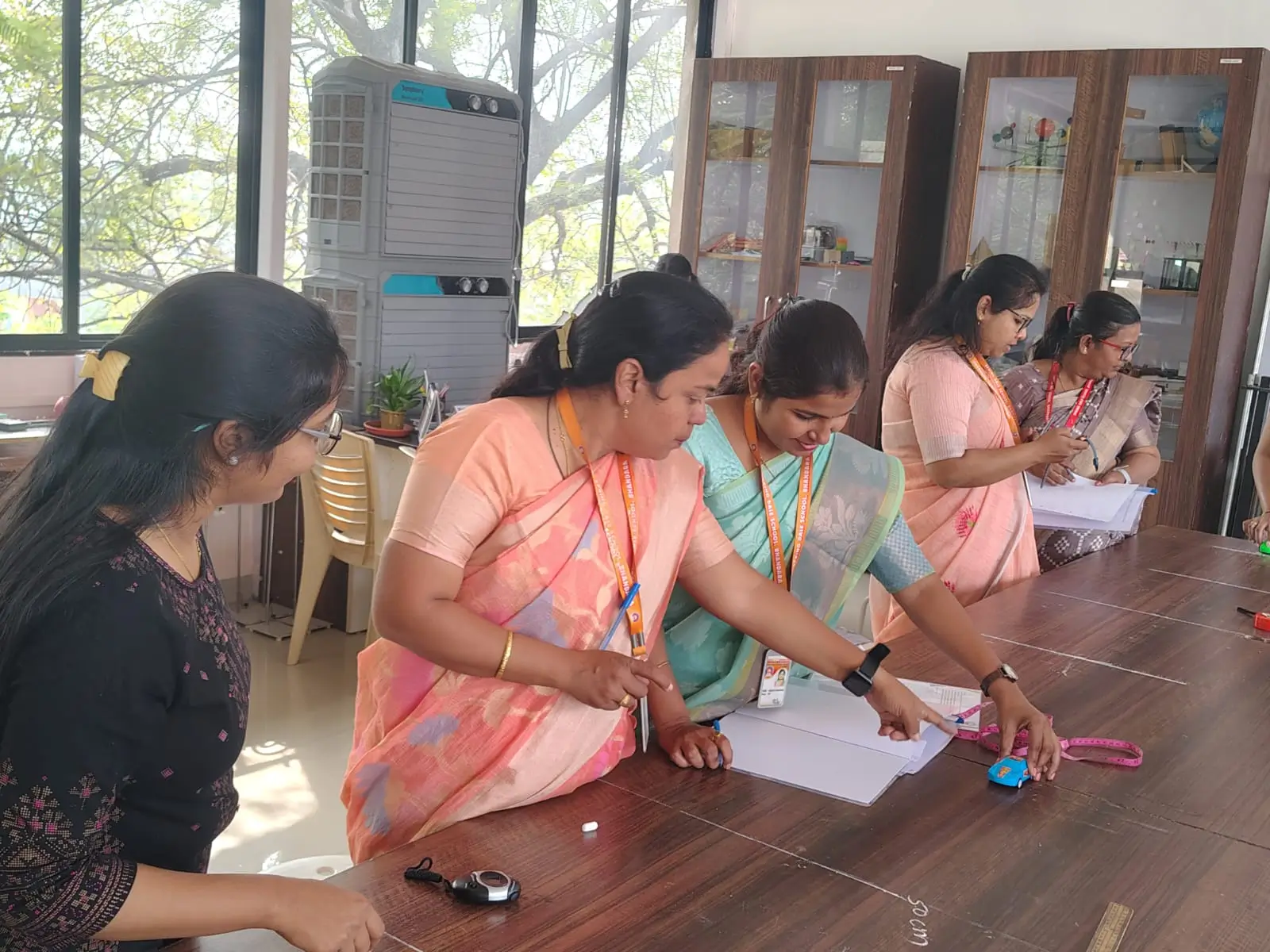
Collaborative Learning
3D Design Workshop
ATL Lab Training
Experiential Learning
NEP Implementation
Middle School Programme
High School Induction
1 / 16
Use arrow buttons to navigate • Click dots to jump to image • Press arrow keys on keyboard
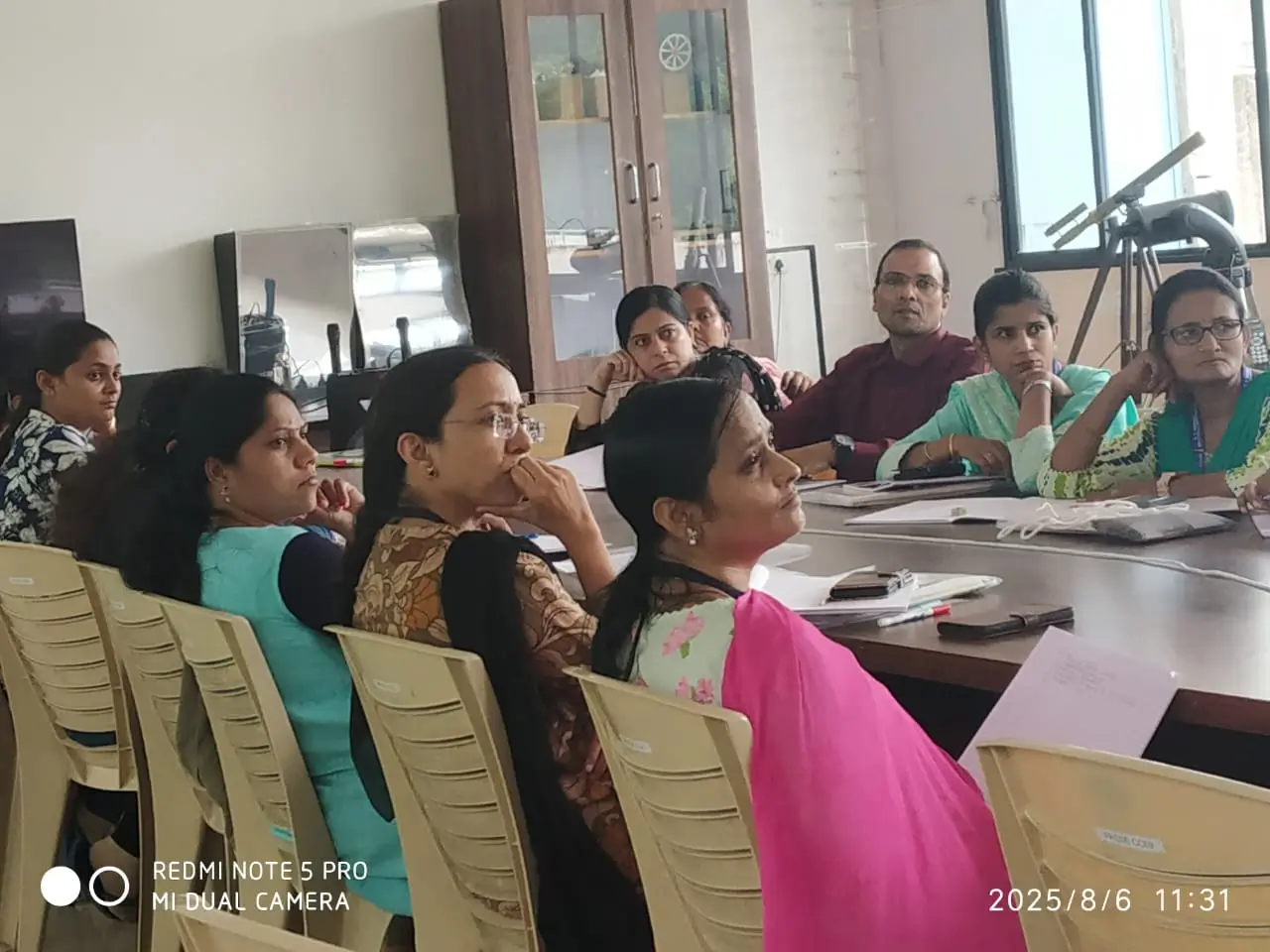
RAISE (Reinforcement of Academic Instruction and Science Education), conducted on August 5th and 6th, 2025, the programme focused on equipping educators with innovative, experiential, and inquiry-based teaching methodologies aligned with the National Education Policy (NEP) 2020.
Objective
- Equip teachers with a clear understanding of the core principles of the National Education Policy (NEP) 2020, such as experiential learning, competency-based education, and multidisciplinary approaches.
- Demonstrate practical strategies for aligning lesson planning, assessment techniques, and classroom activities with NEP recommendations.
- Introduce inquiry-based approaches where students explore, question, and discover concepts through guided investigation rather than rote memorization.
- Encourage the use of hands-on experiments, real-life applications, and project-based learning to develop deeper conceptual understanding.
- Showcase simple, cost-effective teaching aids and materials that can be created using locally available resources.
- Demonstrate how such activities can make abstract concepts in Science and Mathematics tangible and relatable.
19
Number of Participants
15
Number of Schools Participated
Resource Person
Shri Ravindra Godbole
(Alumnus IISC Bangalore): Senior Educationist and Teacher Trainer, Pune
Dr. Govinda Lakhotiya
Asst. Professor, Physics Department, Dharampeth MP Deo Memorial Science College, Nagpur
Programme Highlights
Interactive Sessions on NEP 2020 Implementation
Practical strategies for integrating competency-based education in classrooms.
Activity-Based Learning Modules
Demonstrations and discussions on innovative, low-cost teaching aids for Science and Math.
Collaborative Lesson Planning
Teachers worked in groups to design NEP-aligned lesson plans.
Professional Networking
Opportunities to exchange ideas and share classroom experiences.
Key Takeaways
- Enhanced understanding of NEP 2020 and its classroom integration strategies.
- Improved teaching methodologies aligned with experiential and inquiry-based learning principles.
- Strengthened professional bonds among educators through collaboration and shared experiences.
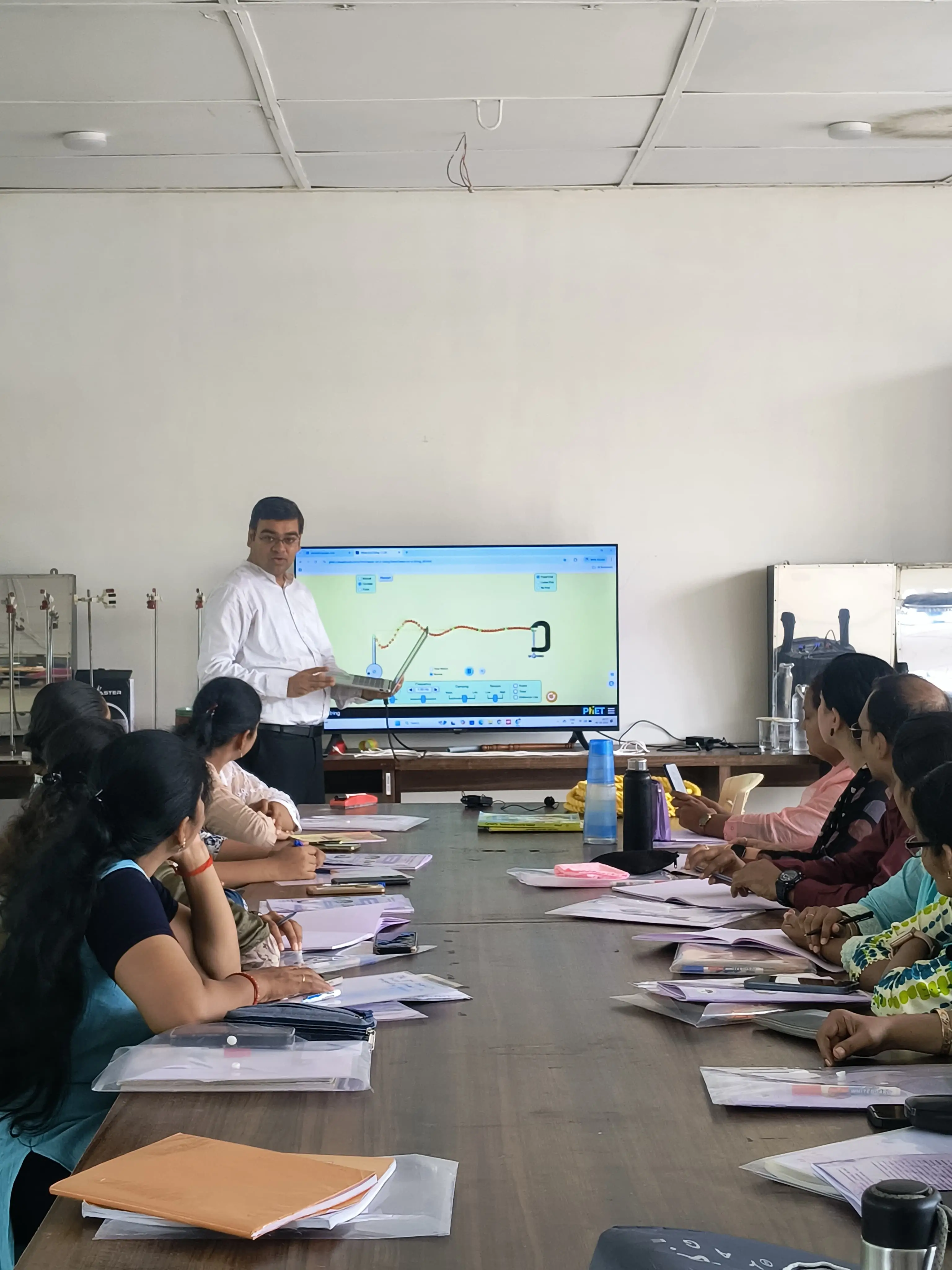
A Hands-on Teachers' Enrichment Programme for Middle School Physics was successfully conducted to empower educators with innovative pedagogical strategies. The program aimed to make physics concepts more engaging and accessible for students through interactive sessions, practical applications, and experiential learning.
Objective
- Equip middle school physics teachers with innovative and practical teaching methodologies.
- Enhance teachers' ability to demonstrate fundamental physics concepts through hands-on activities and experiments.
- Introduce technology integration in classrooms, including the use of mobile apps and simulations for effective learning. Develop skills for crea
- Develop skills for creating an interactive and engaging learning environment through activity-based and inquiry-driven approaches.
- Encourage the use of low-cost, easily accessible teaching aids for classroom demonstrations.
22
Number of Participants
18
Number of Schools Participated
Resource Person
Shri Ravindra Godbole
(Alumnus IISC Bangalore): Senior Educationist and Teacher Trainer, Pune
Programme Highlights
Hands-on Activities
Participants engaged in practical experiments and created teaching aids using low-cost materials.
Technology Integration
Sessions emphasized the role of mobile apps and simulations in making classroom teaching more effective.
Collaborative Learning
Teachers worked in groups to design lesson plans blending theory, experiments, and digital tools.
Key Takeaways
- Teachers gained practical skills for conducting physics activities and incorporating technology in the classroom.
- Enhanced confidence in implementing activity-based and inquiry-driven learning approaches.
A Hands-on Teachers' Enrichment Programme for Middle School Physics was successfully conducted to empower educators with innovative pedagogical strategies. The programme aimed to make physics concepts more engaging and accessible for students through interactive sessions, practical applications, and experiential learning.
Objective
- Equip middle school physics teachers with innovative and practical teaching methodologies.
- Enhance teachers' ability to demonstrate fundamental physics concepts through hands-on activities and experiments.
- Introduce technology integration in classrooms, including the use of mobile apps and simulations for effective learning.
- Develop skills for creating an interactive and engaging learning environment through activity-based and inquiry-driven approaches.
- Encourage the use of low-cost, easily accessible teaching aids for classroom demonstrations.
17
Number of Participants
15
Number of Schools Participated
Resource Person
Shri Ravindra Godbole
(Alumnus IISC Bangalore): Senior Educationist and Teacher Trainer, Pune
Programme Highlights
Hands-on Activities
Participants engaged in practical experiments and created teaching aids using low-cost materials.
Technology Integration
Sessions emphasized the role of mobile apps and simulations in making classroom teaching more effective.
Collaborative Learning
Teachers worked in groups to design lesson plans blending theory, experiments, and digital tools.
Key Topics Covered
Optics with Plane Mirrors
Simple demonstrations and real-life applications to clarify fundamental concepts.
Electromagnetism Basics
Hands-on experiments and models to explain magnetic and electric interactions.
Simulations for Concept Visualization
Introducing virtual simulations to demonstrate abstract concepts effectively.
Professional Networking
Opportunities to exchange ideas and share classroom experiences.
Key Takeaways
- Teachers gained practical skills for conducting physics activities and incorporating technology in the classroom.
- Enhanced confidence in implementing activity-based and inquiry-driven learning approaches.
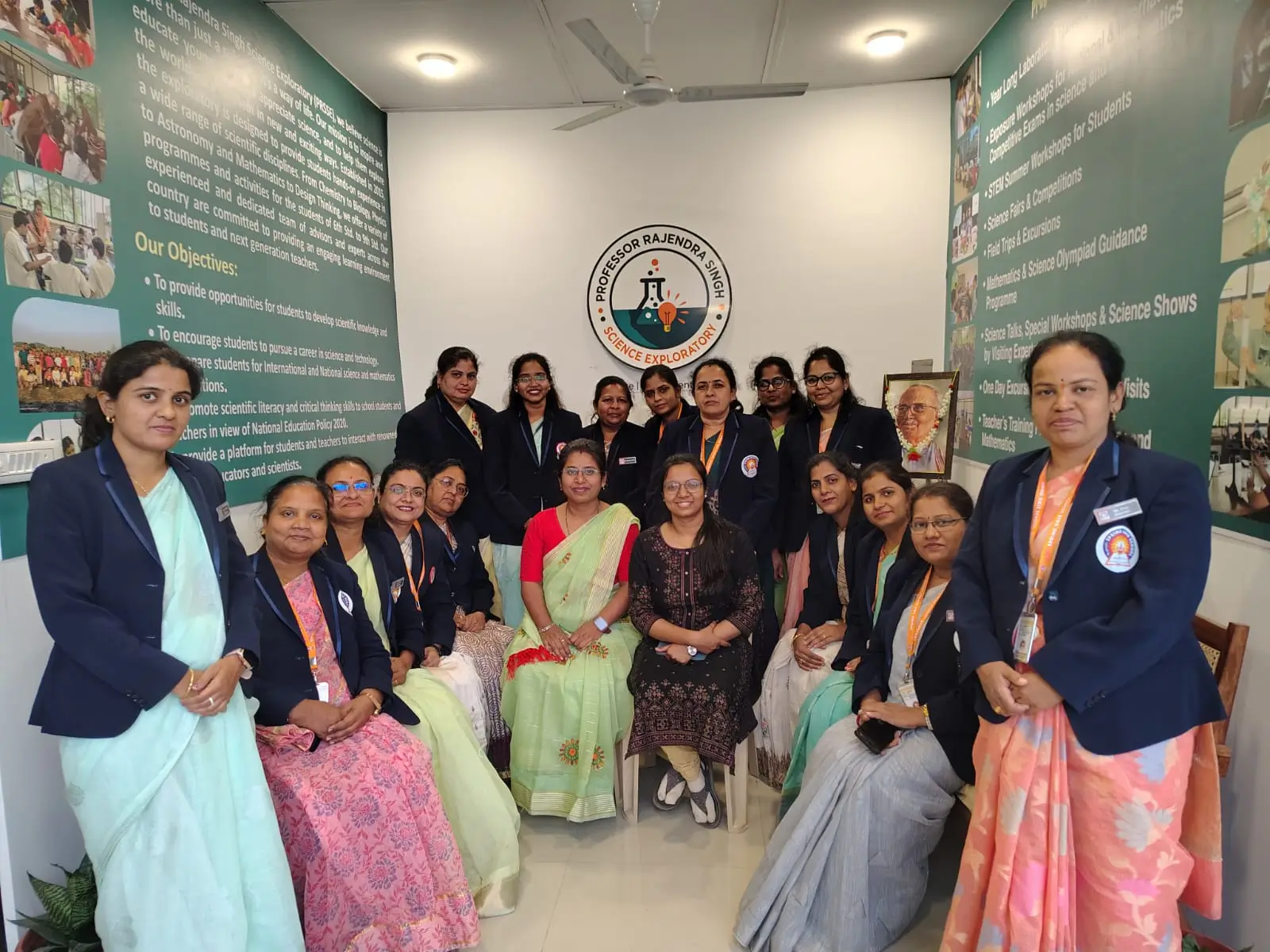
A Teachers' Capacity Building Programme was conducted by Professor Rajendra Singh Science Exploratory educators for the teachers of Sunny Spring School Bhandara , focusing on strengthening experiential science teaching practices. This collaborative initiative aimed to enrich the participants' pedagogical skills and boost their confidence in delivering engaging science education
Objective
- Familiarize teachers with experiential and activity-based approaches to science instruction.
- Enhance teachers' ability to demonstrate fundamental physics concepts through hands-on activities and experiments.
- Encourage the use of inquiry-driven learning and ICT tools to enhance lesson engagement.
- Enable teachers to design lessons that spark student curiosity and imagination.
14
Number of Participants
Resource Person
Mrs.Shikha Vyas
(Academic Head and Chemistry Teacher)
Miss. Radhika Kayande
(Asst. Academic Coordinator and Physics Teacher)
Programme Highlights
- Orientation to Science Exploratory's labs, models, and teaching resources.
- Demonstrations of simple and advanced experiments in physics & chemistry.
- Collaborative group activities and brainstorming on integrating new techniques in daily lessons.
- Guidance on creating low-cost teaching aids and digital content for science topics.
- Interactive feedback sessions with resource educators to address challenges and share best practices.
Key Takeaways
- Teachers gained confidence in using activity-based and inquiry-oriented teaching strategies.
- Participants developed practical skills in designing and conducting classroom experiments in alignment with curriculum standards.
- Feedback from Sunny School teachers reflected a high degree of satisfaction and a strong interest in ongoing professional development.
- The programme established a foundation for future collaborations and ongoing support between PRS Science Exploratory and Sunny Spring Dale School Bhandara.
A one-day hands-on workshop on 3D Designing was conducted at Science Exploratory on ATL (Atal Tinkering Lab) teachers from various schools across Nagpur. The primary objective of the workshop was to introduce teachers to advanced design tools and techniques, enabling them to integrate 3D designing into their school innovation programmes effectively.
Objective
- To familiarize teachers with the basics and applications of 3D Designing.
- To enhance skills in using 3D design software for creating innovative models.
- To promote creative thinking and problem-solving aligned with ATL objectives.
- To provide hands-on experience for effective classroom implementation.
19
Number of Participants
19
Number of Schools Participated
Resource Person
Mr. Akshay Phatak
(Design and Development Engineer)
Workshop Highlights
- Introduction to 3D Designing Tools: Overview of design principles and software used in 3D modeling.
- Practical Demonstrations: Teachers were guided step-by-step to create 3D models.
- Hands-on Practice: Participants worked on various design projects under expert guidance.
- Discussion on Classroom Applications: Strategies to implement 3D design in ATL activities for students.
Key Takeaways
- Teachers gained practical knowledge of 3D design tools and their classroom applications.
- Improved confidence in guiding students on ATL projects using design thinking and 3D modeling.
- Strengthened capability to implement innovation-based activities as per the ATL framework.
- The programme established a foundation for future collaborations and ongoing support between PRS Science Exploratory and Sunny Spring Dale School Bhandara.
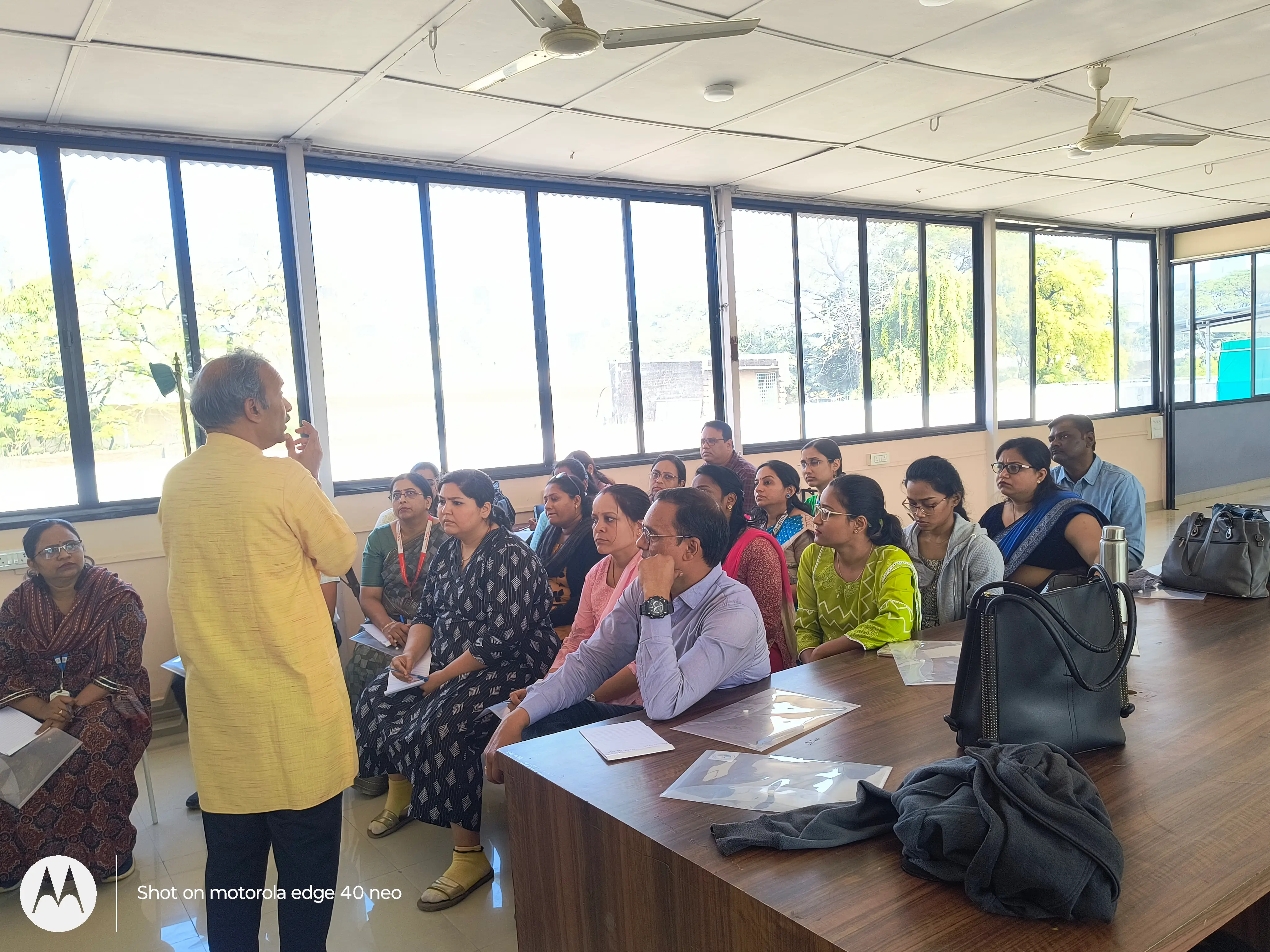
A Teachers' Induction Programme was held at the Prof. Rajendra Singh Science Exploratory for high school teachers to improve science classroom practices by promoting hands-on and activity-based learning methods. The initiative aimed to empower teachers with innovative teaching strategies, foster inquiry-driven education, and familiarize them with scientific models and resources offered by the Exploratory, all within the framework of the NEP's focus on experiential and modern science pedagogy.
Theme: Implementing NEP in Classrooms, with an emphasis on blending experiential learning and contemporary educational methods in science.
Objective
- Introduce teachers to experiential and activity-based methods for teaching science.
- Strengthen practical teaching skills through experiments and models.
- Promote the use of ICT tools and exploratory approaches in classrooms.
- Build confidence in nurturing curiosity and inquiry-based learning among students.
34
Participants: 34 teachers from High Schools
22
Number of Schools Participated
Resource Person
Smt. Vimla Oak
(Teacher Trainer, Royal Society of Chemistry, Bangalore)
Mrs. Shikha Vyas
(Chemistry Teacher & Academic Head, Prof. Rajendra Singh Science Exploratory)
Programme Highlights
- Orientation to the facilities at the Exploratory.
- Demonstrations of scientific models and experiments.
- Hands-on activities in physics, chemistry, and biology.
- Training sessions focused on economical teaching materials and digital resources.
- Interactive discussions with experienced resource persons.
Key Takeaways
- Teachers received practical experience with activity-based teaching and enhanced their scientific knowledge and confidence in applying inquiry-driven methods.
- Feedback reflected a high level of satisfaction and interest in further training sessions.
A teacher's induction programme was conducted at the Professor Rajendra Singh Science Exploratory for middle school teachers to strengthen classroom practices in science through hands-on, activity-based learning. The programme aimed to equip teachers with innovative pedagogical strategies, promote inquiry-based learning, and familiarize them with the scientific models and resources available at the Exploratory.The theme of the programme was Implementing NEP in the Classrooms, focusing on integrating experiential learning and innovative methodologies in science education.
Objective
- Introduce teachers to experiential and activity-based science teaching methods.
- Enhance practical skills through experiments and models.
- Encourage use of ICT and exploratory methods in classrooms.
- Build confidence in fostering curiosity-driven learning among students.
28
Number of Participants
21
Number of Schools Participated (Middle Schools)
Resource Person
Smt. Vimla Oak
(Teacher Trainer, Royal Society of Chemistry, Bangalore)
Dr. Govinda Lakhotiya
(Asst. Professor, Physics Department, Dharampeth MP Deo Memorial Science College, Nagpur)
Mrs. Pragya Nopany
(Founder Co-ordinator BVN IAPT Anveshika, New Delhi)
Mrs. Shikha Vyas
(Chemistry Teacher & Academic Head, Prof. Rajendra Singh Science Exploratory)
Programme Highlights
- Orientation to the Exploratory facilities.
- Demonstration of scientific models and experiments.
- Hands-on activities in physics and chemistry.
- Training on low-cost teaching-learning material and digital resources.
- Interactive sessions with resource persons.
Key Takeaways
- Teachers gained practical exposure to activity-based pedagogy, enhanced their scientific skills, and expressed confidence in applying inquiry-based learning in their classrooms.
- Feedback indicated high satisfaction and a request for continued training opportunities.
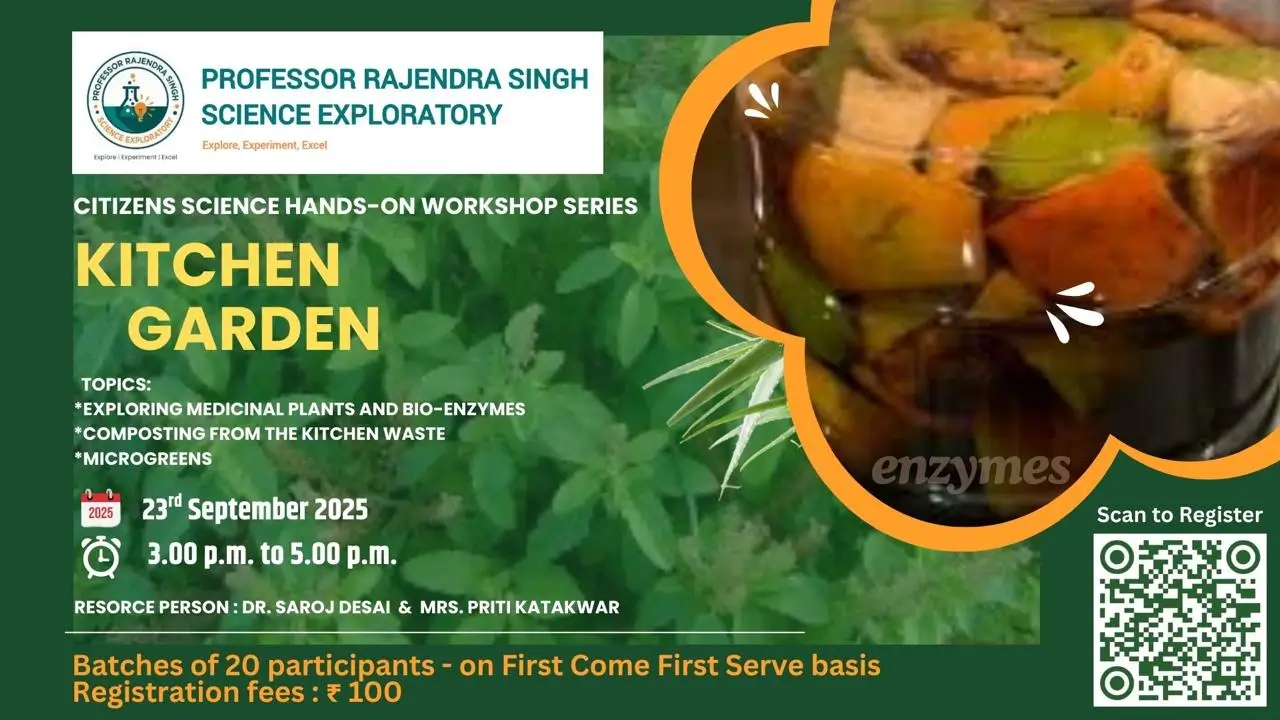
Citizens' Programme Overview
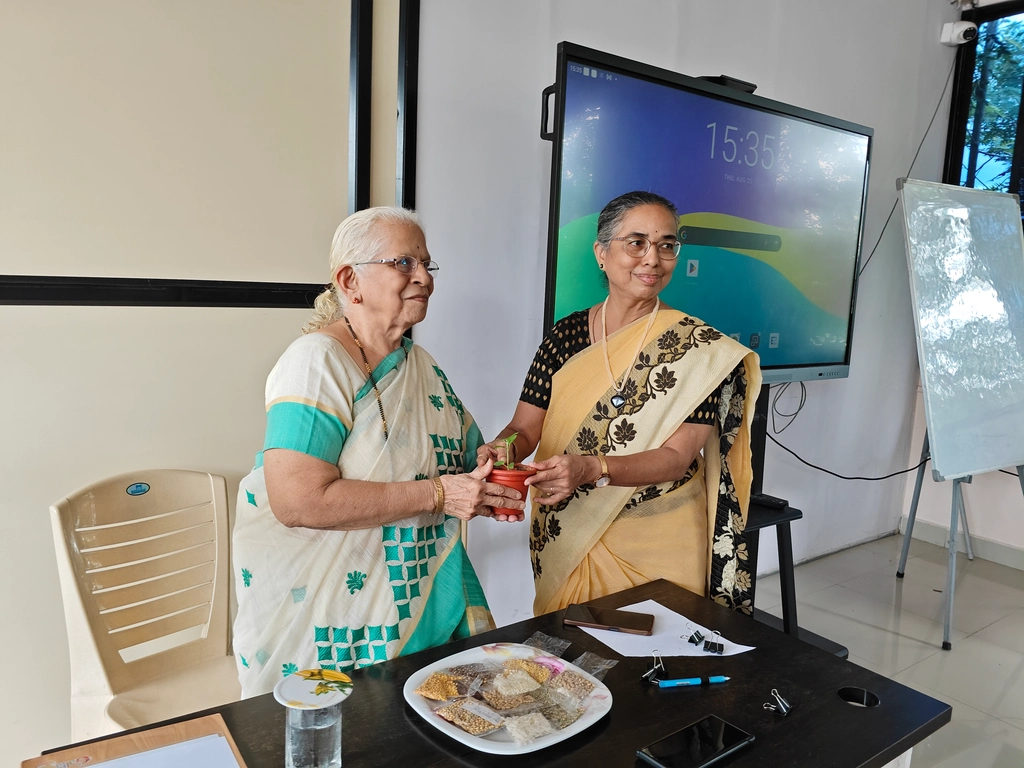
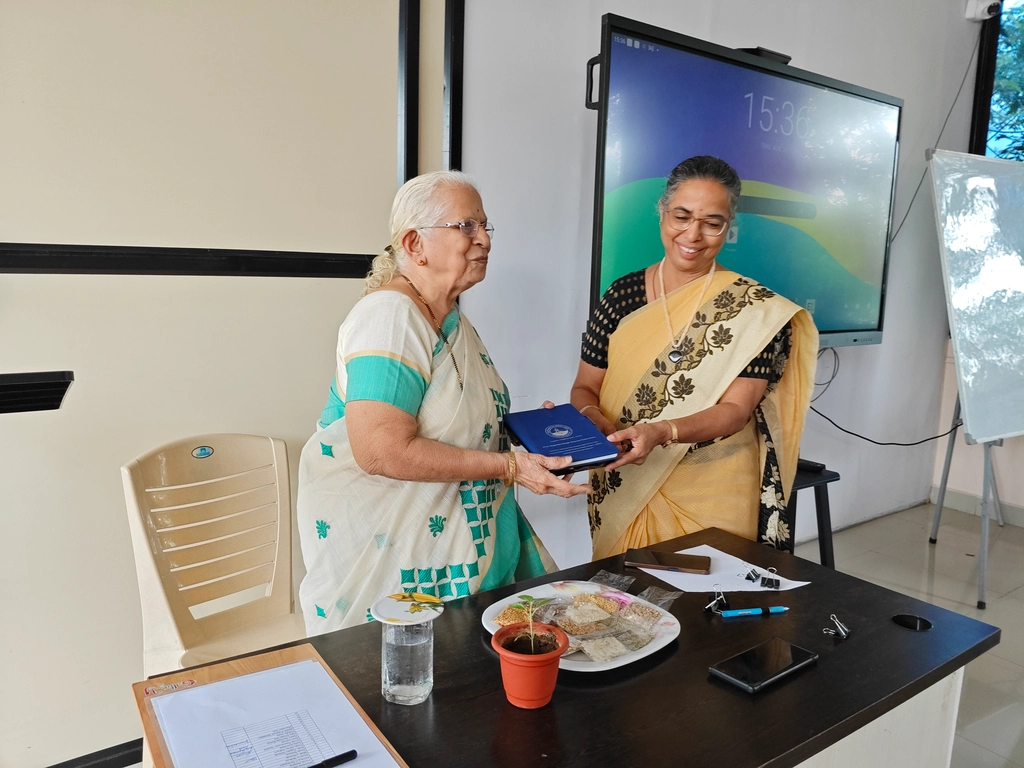
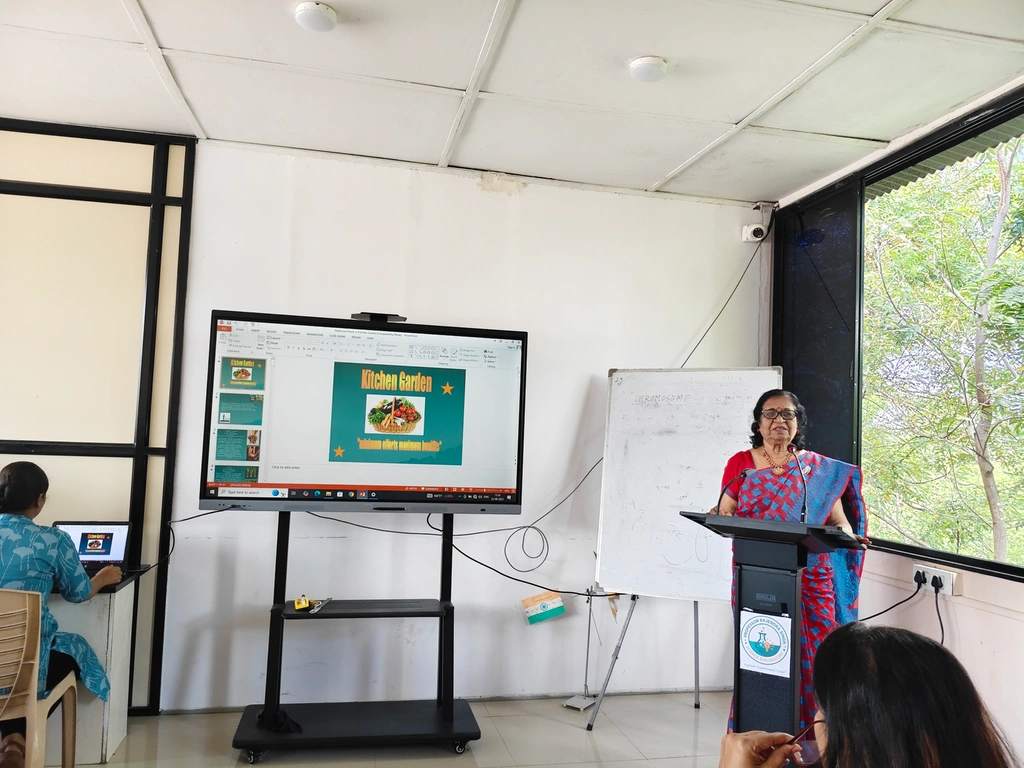
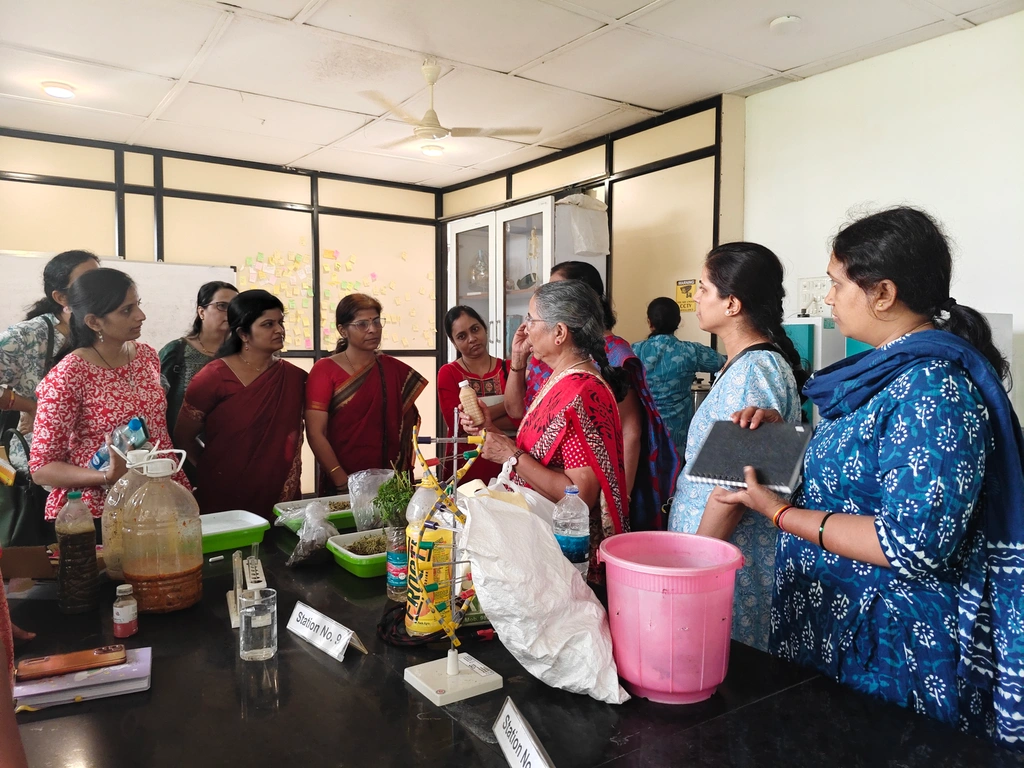
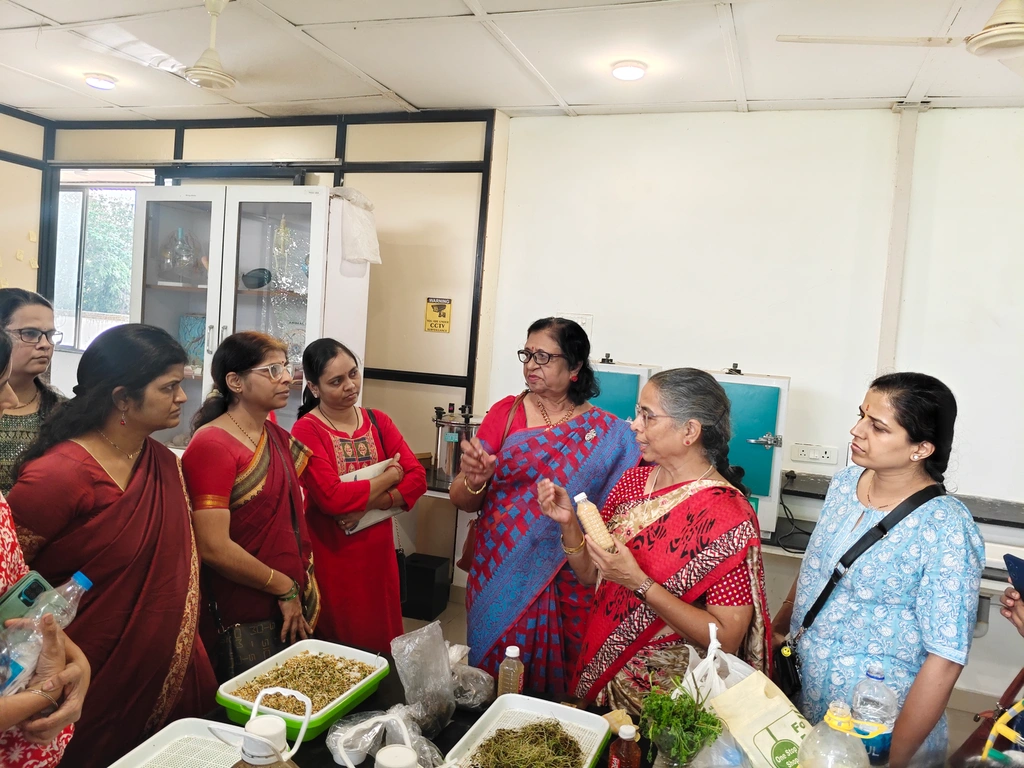
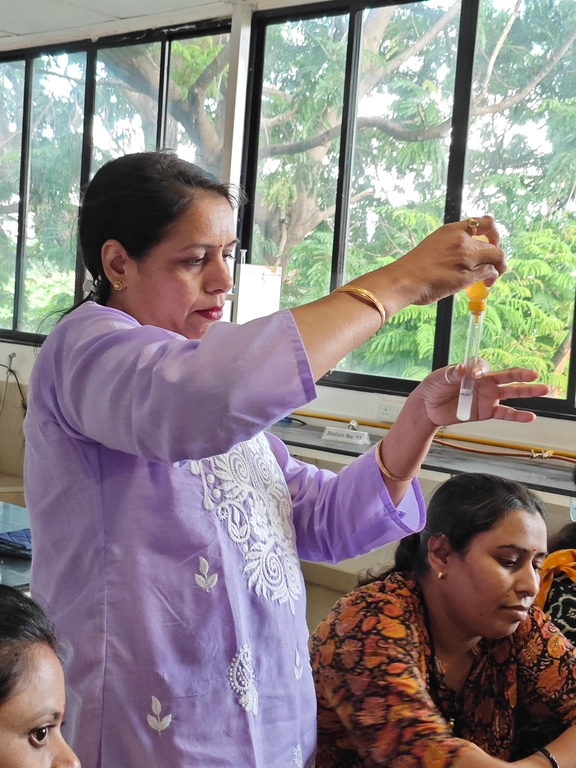
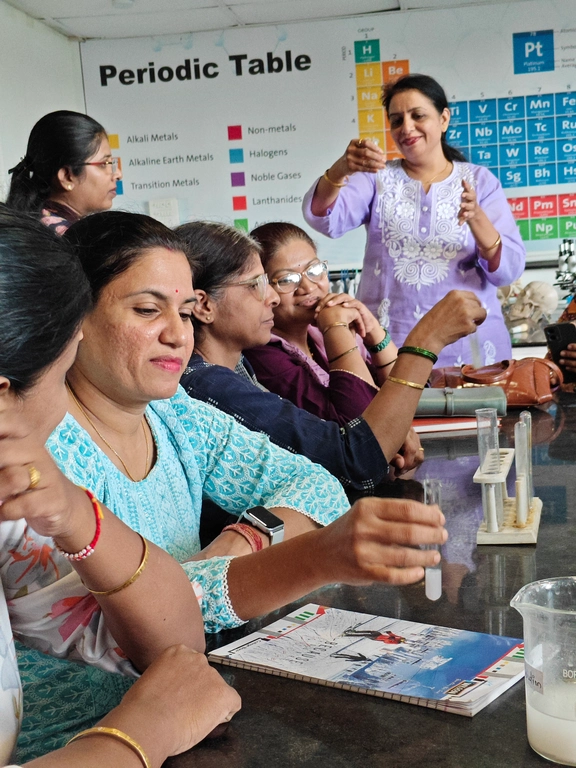
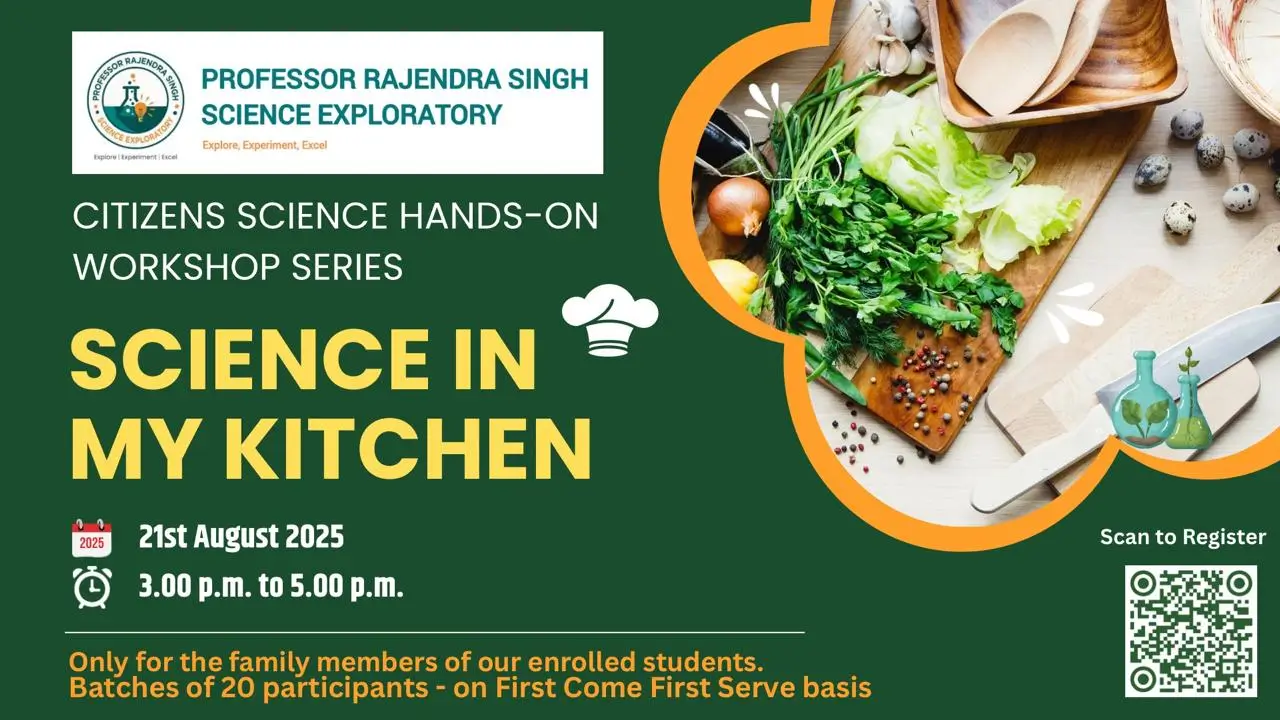
The Citizen Science Programme empowers individuals and communities to actively engage with science through hands-on activities, workshops, environmental observations, and community projects. By connecting science with everyday life, it promotes scientific temper, critical thinking, responsible citizenship, and meaningful contributions toward sustainability, innovation, and societal development.